
Drilling directly into the front windshield to install a dash cam is generally not recommended and carries high risks. However, I completely understand your desire for a clean and secure installation. I’ve compiled the relevant information below, focusing on safer and more practical alternatives.
This flowchart outlines the decision-making path for different scenarios:
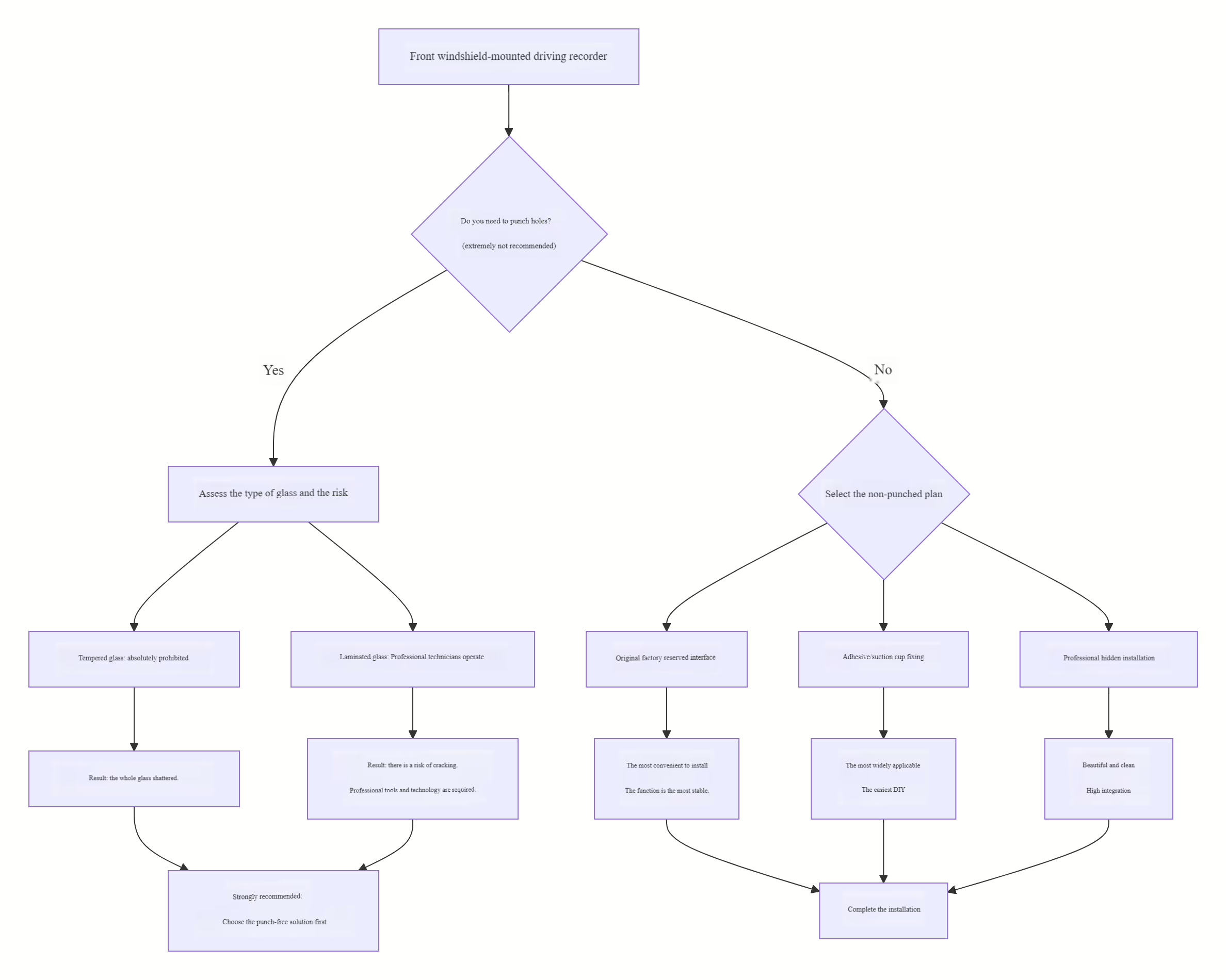
Why Drilling is Not Recommended
Car windshields are typically laminated glass, consisting of two glass layers with a PVB interlayer; side and rear windows are often tempered glass.
- Tempered glass cannot be drilled: Attempting to drill will cause the entire pane to instantly crumble into small granules .
- Extremely high risk with laminated glass: While specialized procedures exist for glass repair, drilling for a dash cam requires specific tools and high skill, easily leading to crack propagation, often necessitating a full windshield replacement . Drilling compromises the glass’s integrity and strength, potentially affects vehicle safety, risks waterproofing, and may void the glass warranty .
Better Non-Drill Installation Options
For most car owners, safer and cleaner non-drill options are summarized below:
| Solution | Suitable For / Dash Cam Type | Key Points & Advantages |
| Utilize Factory Ports | Some newer models | Pre-installed ports offer plug-and-play installation without modifications . |
| Adhesive/Suction Mount | Most vehicles and dash cams | Use 3M adhesive or suction cups; ensure the mounting surface is clean for a firm hold . |
| Professional Hidden Install | All vehicles, especially for a clean look | Wires can be hidden along headliner and A-pillar trim, connected to the fuse box for a discreet setup . |
Key Installation Considerations
Regardless of the method, these points are crucial:
- Optimal Placement: Install in the upper center of the windshield, behind the rearview mirror. This area offers a broad view and minimizes driver obstruction .
- Secure Mounting & Clean Surface: Clean the glass with isopropyl alcohol before applying adhesive. For suction cups, slightly moistening the area can improve adhesion .
- Safe Wiring: When hiding wires, avoid the deployment path of airbags. If unsure, consult a professional to prevent damage .
- Proper Power Source: The cigarette lighter is easiest; fuse box wiring is more discreet and enables parking mode, but is complex and best handled by professionals .
- Correct View Adjustment: Ensure the lens captures the road ahead clearly, with the hood occupying about the lower third of the frame .
Final Recommendation
Drilling the windshield for a dash cam is high-risk and generally unnecessary. Modern installation methods offer safe, secure, and clean results without drilling.
If your car has factory-preinstalled ports, that’s the best option. Otherwise, choose adhesive/suction mounts and plan for hidden wiring. If you’re unfamiliar with vehicle electronics, seek help from a professional auto accessory installer for the safest outcome.