
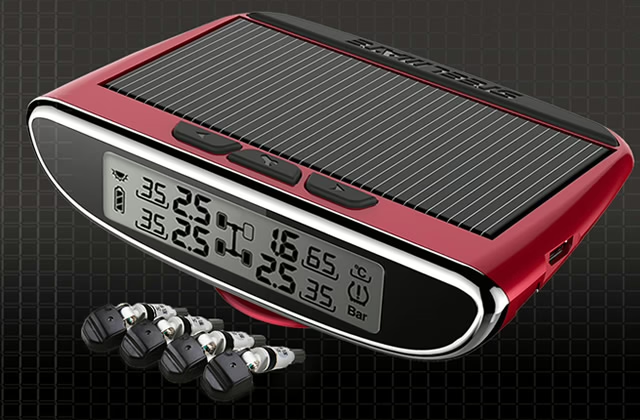
There are generally two types of tire pressure gauges: mechanical and electronic. As for the best placement, there are two options: internal and external.
Mechanical: Mechanical gauges are generally cheaper and more durable. However, some observant drivers will notice that the pressure reading differs when the gauge is on the valve and when it’s removed, indicating a potential error and even tire leaks. Over time, the readings become less accurate. Therefore, it’s best to replace these gauges periodically.
Electronic: Having discussed the characteristics of mechanical tire pressure gauges, what about electronic ones? They are more accurate, but unlike mechanical gauges, they shouldn’t be handled carelessly, avoiding bumps and knocks. Electronic gauges are more susceptible to damage from impacts, as these can affect the readings. Handle them gently to ensure accurate tire pressure readings.
Built-in vs. external: Generally, built-in tire pressure monitoring systems (TPMS) measure tire temperature, offering greater accuracy and being unaffected by vibrations, external temperatures, or vehicle speed. They are also less susceptible to theft and the risk of being thrown off during high-speed driving. External systems, on the other hand, are more prone to theft. Even if stolen, you still need to monitor tire pressure, requiring a replacement, which is inconvenient. There’s also the risk of the gauge being thrown off – if the gauge is gone, how can you monitor tire pressure?
Finally, regarding data transmission, electronic TPMS should promptly relay tire pressure data via sensors and display it on the screen. In cases of rapid deflation, it should issue an alarm. This ensures tire safety by informing the driver of the tire pressure status, allowing for timely preparation and preventing accidents, thus greatly enhancing the safety of passengers. Therefore, electronic TPMS is superior in terms of timely data transmission.