
I. Installation Steps for a Car Wash High-Pressure Water Pump
When using the machine, choose a suitable location, avoiding direct sunlight or damp, rainy areas. Ensure the machine casing is properly grounded for safety. Then, use a stiff flexible hose of appropriate length and size to securely seal the pump’s suction inlet connector (ensuring a tight seal to prevent air leakage). Pour clean water into the pump barrel through this hose until it is full. Attach the included mesh cover to the other end of the suction hose. Then, install the outlet hose according to your intended use. For car washing or general cleaning, connect the car wash hose to the pump head outlet and attach a water gun. Squeeze the water gun switch (on), and turn on the power to dispense a powerful, high-pressure water stream. To change the water pattern, simply release the water gun switch (briefly shut off the water flow) and rotate the copper sleeve on the gun head to the desired position. For pumping or other purposes, simply attach the hose directly to the outlet hose and secure it securely, using the same method as a regular pump. To change the pump pressure or flow rate during use, adjust the small handle on the pump head. Pay attention to the gauge reading and adjust accordingly within a certain range; it’s very convenient.
II. Precautions for Car Wash High-Pressure Water Pumps
- Before first use, remember to fill the pump cylinder with water. After use, the water stored in the pump generally won’t leak for a short time. The next time you use it, simply turn on the power switch. If the machine is not used for a long time, empty the water from the pump to prevent rust on internal parts. Remove the rubber sleeve and store it separately to prevent the screw from sticking to the sleeve. Reinstall it when needed.
- Stopping and starting during operation will not overload the motor. However, to save energy, reduce mechanical wear, and extend the machine’s lifespan, turn off the power when pausing washing. Do not leave the water gun off for extended periods without turning off the motor.
- If the machine has not been used for a long time and the rubber sleeve has not been removed, the motor may not turn on when you try to use it again. After filling with water, check and try turning on the power. If the machine turns normally, it’s safe to use. If it doesn’t turn on, immediately disconnect the power to prevent damage to the motor. The main reason the motor won’t turn is that the internal screw is stuck to the rubber sleeve. In this case, remove the pump cover and motor fan cover, and then remove the rubber sleeve by working together at both ends. Clean the debris inside the sleeve and apply some lubricant (grease, machine oil, or vegetable oil are all acceptable). Reinstall the machine, and it will turn normally.
Over time, screw wear will reduce flow and pressure, affecting the cleaning effect. Simply disassemble the pump head and replace it with the same screw to restore the original effect. This machine has no other components; disassembling the pump cylinder reveals everything. Aside from replacing the screw, there are almost no other repairs. Routine maintenance can be easily handled by the user. As long as it is used correctly, the machine generally won’t malfunction, so users don’t need to worry and can use it with confidence.
III. Car Wash Water Pump Usage Modes
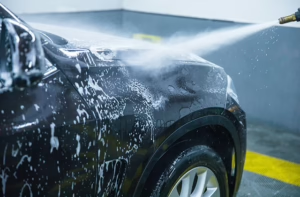
The car wash water pump has multiple usage modes. In terms of water output, it can use a spray of water for large-area cleaning, it can use foam spray for cleaning vehicle surfaces, and it can also use a car wash gun to directly spray water for a comprehensive cleaning of the vehicle’s surface, leaving the entire vehicle shiny and clean. In addition, there are two modes to choose from when selecting the water inlet method: one is to connect to the faucet, and the other is to insert the water inlet pipe into the water bucket for self-suction. These two methods can be used flexibly.