
What does the P002A code mean?
The P002A is a generic OBD-II (Onboard Diagnostics II) powertrain trouble code. Its official definition is “B Camshaft Profile Control Circuit/Open Bank 1“.
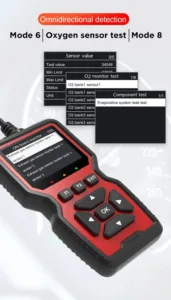
This code is stored when the Engine Control Module (ECM) or Powertrain Control Module (PCM) detects an open circuit condition in the control circuit for the “B” camshaft (typically the exhaust camshaft) on engine Bank 1. This system is part of the Variable Valve Timing (VVT) or camshaft profile adjustment technology. The ECM sends a precise electrical signal, often a Pulse Width Modulated (PWM) signal, to a solenoid (commonly called a VVT solenoid, Oil Control Valve, or camshaft position actuator). This solenoid controls oil flow to a phaser that physically adjusts the camshaft’s angular position relative to the crankshaft, optimizing valve timing for performance and efficiency. An “open circuit” means the electrical path is broken, preventing the ECM from controlling the exhaust camshaft timing on Bank 1. The first step in addressing this issue is to connect a professional obd2 scanner to read and confirm the code.
Symptoms of Error Code P002A
- Illuminated Check Engine Light (MIL).
- Reduced engine power and sluggish acceleration.
- Decreased fuel economy (poor MPG).
- Rough or unstable engine idle.
- Engine may hesitate or stumble during acceleration.
- Altered engine power bands and general reduction in efficiency.
- In rare cases, difficulty starting the engine.
Main Causes of Error Code P002A
- Open circuit or broken wire in the wiring harness for the Bank 1 “B” camshaft profile control solenoid (VVT solenoid).
- Faulty or internally open Bank 1 “B” camshaft profile control solenoid/VVT actuator.
- Damaged, corroded, or loose electrical connector at the solenoid or ECM.
- Blown fuse for the VVT system circuit.
- Faulty Engine Control Module (ECM) driver circuit (less common).
- Severely low engine oil level or contaminated oil, which can cause solenoid malfunction that mimics an electrical open circuit.
- Issues with the timing chain or belt that affect camshaft position sensor readings, potentially leading to circuit fault codes.
How to Diagnose Error Code P002A?
- Connect a professional obd2 diagnostic scanner or obd2 diagnostic tool to the vehicle’s DLC port. Confirm the presence of P002A and note any other related codes (e.g., P0013, P0024). Clear the codes and perform a test drive to see if P002A returns, confirming it’s an active and current fault.
- Perform a thorough visual inspection. Locate the Bank 1 “B” (exhaust) camshaft VVT solenoid (consult the service manual for exact location). Inspect the entire wiring harness from the solenoid connector back to the ECM. Look for any obvious damage, chafing, burning, or disconnected wires. Check the connector for corrosion, bent pins, or poor seating.
- Check the engine oil. Verify the oil level is correct on the dipstick. Inspect the oil’s condition; if it is very dark, sludgy, or contaminated, it can affect VVT system operation. Consider an oil and filter change using the manufacturer-specified oil as a preliminary step.
- With the ignition OFF and the solenoid connector disconnected, use a digital multimeter to test the solenoid’s internal coil resistance. Measure across the two terminals of the solenoid itself. Compare the reading to the manufacturer’s specification (often between 5-20 ohms at room temperature). An infinite resistance (OL) reading indicates an open coil inside the solenoid, confirming it is faulty.
- Test the wiring harness for an open circuit. With the connector still disconnected, set the multimeter to test for continuity. Check for continuity between the control circuit wire at the vehicle-side connector and the corresponding pin at the ECM connector (with the ECM disconnected). No continuity (infinite resistance) confirms an open circuit in the wire.
- Check for power and ground at the connector. With the ignition ON (engine off), use the multimeter in DC voltage mode to check for battery voltage at the power supply pin of the vehicle-side connector (refer to wiring diagram). Also, check for a good ground connection.
- If basic tests are inconclusive, use an advanced obd tool scanner with bidirectional controls to command the VVT solenoid on/off while monitoring the circuit status and camshaft position parameters in the live data stream.
Possible Causes and Diagnostic Methods
| Possible Cause | How to Check? |
| Open Circuit in Wiring | Disconnect both ends of the circuit (solenoid and ECM). Use a multimeter to check for continuity through the control wire. No continuity confirms an open circuit (broken wire). |
| Faulty VVT Solenoid (Open Coil) | Disconnect solenoid. Measure resistance across its two terminals. An infinite resistance (OL) reading confirms an internally open solenoid coil. |
| Corroded or Loose Connector | Visually inspect the solenoid and ECM connectors for green/white corrosion, bent pins, or terminals that are not fully seated. Clean with electrical contact cleaner and reseat. |
| Blown Fuse for VVT System | Consult the vehicle’s fuse diagram. Locate and visually inspect the fuse(s) for the VVT system or engine control circuits. Replace if blown. |
| Low/Contaminated Engine Oil | Check oil level on dipstick. Inspect oil condition. Low level or sludge can starve the VVT system, causing solenoid failure. |
Tools needed: A professional obd2 scanner or obd reader for initial code reading and data monitoring, a high-quality digital multimeter for electrical testing (continuity, resistance, voltage), basic hand tools (wrenches, sockets, screwdrivers), electrical contact cleaner, and the vehicle’s service manual for wiring diagrams and specifications.
How do I fix error code P002A? (Solutions to the Problem)
Simple Fixes
- Repair Open Wiring: If inspection reveals a broken wire, repair it properly by splicing in a new section of wire using solder and heat-shrink tubing, ensuring secure connections and proper routing away from heat and moving parts.
- Clean and Secure Electrical Connectors: Disconnect the battery. Thoroughly clean corroded terminals on both the solenoid and vehicle-side connectors using electrical contact cleaner and a small brush. Allow to dry completely, apply a small amount of dielectric grease, and reconnect firmly, ensuring the locking tab clicks into place.
- Replace a Blown Fuse: If the VVT system fuse is blown, replace it with one of the correct amperage. Investigate why it blew (potential short circuit) if it happens again.
- After any simple repair, clear the codes with your obd2 diagnostic tool and test drive to ensure the code does not return.
In-depth Diagnosis and Repair Solutions
- Replace the Faulty VVT Solenoid: If resistance testing confirms the solenoid coil is open (infinite resistance), replacement is necessary. Use an OEM or high-quality equivalent part. Always replace the seal or O-ring. After installation, clear codes and perform any required ECM relearn or adaptation procedure using your scanner.
- Repair or Replace the Wiring Harness: For complex opens within a harness that is difficult to access, it may be necessary to run a new “repair wire” from the ECM connector pin to the solenoid connector pin, following proper routing and securing methods.
- Address Engine Oil Issues: If oil contamination or low level is suspected, perform a complete engine oil and filter change using the exact oil grade and viscosity specified by the manufacturer.
- Inspect Timing Components: In some vehicles, a severely stretched timing chain or jumped timing can cause correlation errors that may manifest as circuit codes. A mechanical inspection of timing marks may be necessary.
- Replace the Engine Control Module (ECM): This is a last-resort repair. It should only be considered if all wiring, connectors, fuses, and the solenoid are confirmed to be perfect (no open circuit) and the code persists. The new ECM must be properly programmed and configured for the specific vehicle.
Fix faults based on symptoms
| Symptom Pattern | Recommended Repair Path |
| Code P002A is current, engine runs poorly. | Likely a hard fault (open circuit). Immediately perform wiring continuity and solenoid resistance tests to locate the break or faulty component. |
| Code is intermittent, appears and disappears. | Suggests a loose connection or an intermittently failing component. Focus on wiggling the harness and connectors while the engine is running to try to replicate the fault. Inspect connectors for poor contact or corrosion. |
| Code returns immediately after being cleared with an obd reader. | Indicates a persistent, active circuit fault. The root cause (broken wire, open solenoid) has not been corrected. |
| Code appears alongside other camshaft or correlation codes (e.g., P0016). | May indicate a mechanical timing issue (stretched chain) or a problem with a shared power/ground circuit. Diagnose the primary mechanical fault first. |
Common Error Code P002A in Vehicles
General Motors (GM) – Chevrolet, GMC, Cadillac, Buick: Very common in vehicles with the 2.0L, 2.4L, 2.5L, 3.6L (LGX, LFX), and various V8 engines. The exhaust camshaft position actuator solenoid on Bank 1 is a frequent failure point. Wiring issues are also common where the harness passes near the hot exhaust manifold. Using a professional-grade obd2 diagnostic scanner to check for circuit status “Open” is key for GM vehicles.
Ford (EcoBoost engines – 1.5L, 2.0L, 2.3L, 2.7L, 3.5L): Prevalent in Ford’s EcoBoost lineup (Focus, Escape, Fusion, F-150). The “Camshaft Position (CMP) actuator” solenoid circuit for the exhaust camshaft on Bank 1 can develop an open circuit due to internal solenoid failure or connector issues exacerbated by engine heat and vibration.
Chrysler/Dodge/Jeep (Pentastar 3.6L V6): A known issue in vehicles like the Jeep Grand Cherokee, Wrangler, Dodge Charger, and Chrysler 300. The exhaust VVT solenoid on Bank 1 can fail open. Diagnosis often involves checking the solenoid resistance and inspecting for oil leaks from the valve cover that may lead to connector corrosion.
Hyundai/Kia (Theta II, Nu, and Lambda GDI engines): Common in Sonata, Santa Fe, Sorento, Optima, and Sportage models. The exhaust CVVT (Continuously Variable Valve Timing) solenoid on Bank 1 is prone to failure, often due to internal electrical opens. These engines are sensitive to oil quality; using the correct low-viscosity oil and regular changes is crucial.
Volkswagen/Audi (EA888 2.0L TSI/TFSI engines): Common in many VW and Audi models. The exhaust camshaft adjustment valve (N318 or similar) on Bank 1 can fail, setting code P002A. The wiring harness to the valve, located on the rear of the cylinder head, can also suffer from heat degradation.
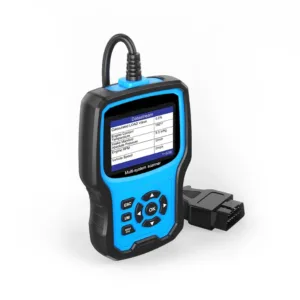
BMW (N20, N55, B48, B58 engines): BMW’s VANOS system for the exhaust camshaft on Bank 1 can trigger P002A. The VANOS solenoid itself is a common wear item. The electrical connector or wiring can also be problematic. Diagnosis requires a capable obd2 diagnostic scanner to read BMW-specific fault data and perform solenoid activation tests.
Subaru (FB and FA series engines, e.g., in Outback, Forester, WRX): The exhaust AVCS (Active Valve Control System) solenoid on Bank 1 (driver’s side on most Subaru boxer engines) can fail or become clogged with debris, leading to an open circuit code. Oil passages feeding the solenoid are small and can clog if oil changes are neglected.
P002A Frequently Asked Questions
Can I drive my car with a P002A code?
It is not recommended for extended driving. The vehicle will likely be in a reduced-power “limp mode,” have poor fuel economy, and may run roughly. While it might not cause immediate catastrophic failure, driving with faulty valve timing can lead to reduced performance, increased emissions, and potential long-term engine damage. Have it diagnosed promptly.
What’s the difference between P0013 and P002A?
P0013 is “B Camshaft Position Actuator Circuit/Open (Bank 1)”. While very similar, P002A specifically refers to the “Camshaft Profile Control” circuit. In many modern vehicles with advanced VVT systems that can change camshaft profile (lift/duration) in addition to timing, P002A may point to a circuit for a more advanced actuator. However, in practice, the diagnostic approach for both codes is often identical—checking the solenoid and its circuit on the Bank 1 exhaust camshaft.
How much does it cost to fix a P002A code?
Costs vary: Diagnostic fee: $100-$200. A new VVT solenoid: $80-$300. Labor for solenoid replacement: 0.5-2.5 hours ($75-$400). Total typically ranges from $255 to $900. Costs are significantly higher if extensive wiring repair, timing chain service, or ECM replacement is required.
Will disconnecting the battery clear a P002A code?
Disconnecting the battery may clear the code and turn off the Check Engine Light temporarily. However, if the underlying open circuit fault is still present, the code will return as soon as the ECM completes its self-tests during the next drive cycle. The code must be properly cleared with an obd reader after the repair is complete.
Can low oil cause a P002A code?
Yes, indirectly. The VVT system relies on clean engine oil at the correct pressure to function. Severely low oil level or heavily contaminated, sludgy oil can prevent the VVT solenoid from operating correctly. The solenoid may stick or fail to move, which the ECM can interpret as an open circuit, potentially triggering P002A. Always check the oil level and condition first.
Is P002A always an electrical problem?
Primarily, yes. The code definition is for a “circuit/open” condition, which is an electrical fault (broken wire, open solenoid coil). However, severe mechanical binding of the solenoid from sludge can prevent any electrical current from flowing, which the ECM may interpret as an open circuit. Additionally, issues with the timing chain can cause correlation faults that may accompany electrical codes.
Do I need a special obd2 diagnostic scanner to diagnose P002A?
While a basic obd2 code reader can confirm the code’s presence, a more advanced obd2 diagnostic scanner with bidirectional controls and live data streaming is highly recommended. This allows you to view the commanded vs. actual camshaft position, monitor the circuit status, and even perform an active test to command the solenoid, making diagnosis much more accurate and efficient.
P002A Related OBD2 Errors
- P0013: B Camshaft Position Actuator Circuit/Open (Bank 1)
- P002B: B Camshaft Profile Control Circuit Low (Bank 1)
- P002C: B Camshaft Profile Control Circuit High (Bank 1)
- P0014: B Camshaft Position – Timing Over-Advanced or System Performance (Bank 1)
- P0015: B Camshaft Position – Timing Over-Retarded (Bank 1)
- P000B: B Camshaft Position Slow Response (Bank 1)
- P0016: Crankshaft Position – Camshaft Position Correlation (Bank 1 Sensor A)
Important! Code P002A indicates an electrical open circuit in a critical engine management system. While often repairable, misdiagnosis can lead to unnecessary parts replacement. Working on automotive electrical systems requires care to avoid causing further damage. Always disconnect the vehicle’s battery before performing any electrical testing or repair on the VVT system or its wiring. If you are not confident in your ability to perform these diagnostics safely and accurately, it is strongly advised to seek assistance from a qualified automotive technician equipped with the proper tools, such as a professional obd2 diagnostic scanner and multimeter.