
What does the P001C code mean?
The P001C is a generic OBD-II (Onboard Diagnostics II) trouble code. Its official definition is “A Camshaft Profile Control Circuit High (Bank 1)“.
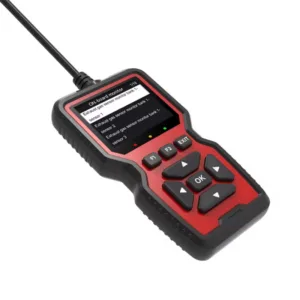
This code is triggered when the vehicle’s Engine Control Module (ECM) or Powertrain Control Module (PCM) detects that the voltage in the control circuit for the “A” camshaft (typically the intake camshaft) on engine Bank 1 is consistently higher than the calibrated maximum threshold. This high voltage condition indicates an electrical fault within the circuit that controls the camshaft profile adjustment system, a key component of modern Variable Valve Timing (VVT) or variable camshaft profile technology. The system relies on an electronic solenoid (often called an Oil Control Valve or VVT solenoid) to direct engine oil pressure to a phaser, which physically rotates the camshaft to optimize valve timing for performance, efficiency, and emissions. A persistently high circuit voltage suggests a problem like a short to power or a faulty component preventing the ECM from properly controlling the solenoid. The first step in addressing this issue is to connect a professional obd2 scanner to read and confirm the code.
Symptoms of Error Code P001C
- Illuminated Check Engine Light (MIL).
- Reduced engine power and sluggish acceleration.
- Noticeable decrease in fuel economy (lower MPG).
- Rough or unstable engine idle, sometimes with shaking.
- Poor overall drivability and hesitation during acceleration.
- Possible engine knocking or abnormal noises from the timing cover area.
- In some vehicles, the engine may enter a reduced power or “limp home” mode.
Main Causes of Error Code P001C
- Wiring and Connector Issues: A short to power (12V) in the wiring harness for the Bank 1 “A” camshaft profile control solenoid. This can be caused by damaged insulation, pinched wires, or corrosion creating an unintended connection to a power source.
- Faulty Camshaft Profile Control Solenoid (VVT Solenoid): An internal failure within the solenoid itself, such as a shorted coil or stuck valve, causing it to draw excessive current or present an abnormal resistance to the ECM.
- Engine Oil Problems: Low engine oil level, severely contaminated or sludgy oil, or using oil with incorrect viscosity. Poor oil condition can affect the hydraulic operation of the VVT system and lead to electrical feedback issues.
- Faulty Engine Control Module (ECM): A rare internal failure within the ECM’s driver circuit for the solenoid, causing it to incorrectly interpret or supply voltage.
- Issues with Related Sensors: A failing camshaft position sensor or crankshaft position sensor sending erratic signals, which may indirectly affect the control circuit’s operation.
- Mechanical Binding in the VVT System: A mechanically stuck or binding camshaft phaser can place an abnormal load on the control solenoid, potentially leading to a high voltage reading.
How to Diagnose Error Code P001C?
- Read and Record All Codes: Use a capable obd2 code reader or vehicle diagnostics tool to connect to the vehicle’s DLC port. Read and document all stored Diagnostic Trouble Codes (DTCs), paying special attention to P001C and any related codes (like P001A, P001B, P0011, P0016). Note if the code is current or pending.
- Check Engine Oil Level and Condition: This is a critical and simple first check. Inspect the engine oil level with the dipstick. Assess the oil’s color and consistency. Dark, sludgy, or low oil is a common contributor to VVT system faults. Perform an oil and filter change using the manufacturer-specified oil grade and viscosity if needed.
- Visual Inspection of Wiring and Connectors: Locate the Bank 1 “A” camshaft profile control solenoid (usually on the cylinder head near the timing cover). Visually trace the entire wiring harness connected to it. Look for any signs of chafing, melting, cuts, or rodent damage. Disconnect the electrical connector at the solenoid and inspect the terminals for corrosion, bent pins, or moisture.
- Electrical Circuit Testing with a Multimeter: Perform key electrical tests. With the ignition off, measure the resistance of the solenoid coil and compare it to the specification in the service manual (typically between 5-20 ohms). A reading significantly higher than specified may indicate an open circuit, while a very low reading suggests a short. Check for continuity between the solenoid control wire and chassis ground (with connector disconnected) to rule out a short to ground. Check for voltage on the control wire with the ignition on (engine off); there should be very low or no voltage. If you measure full battery voltage, it indicates a short to power.
- Test Solenoid Operation: If possible, use an advanced car scanner with bidirectional controls to command the solenoid on and off while observing the response in live data. You can also carefully apply 12V directly to the solenoid terminals (briefly) to listen for a distinct clicking sound, indicating mechanical movement.
- Check Related Components and Live Data: Inspect the camshaft and crankshaft position sensors. Use your vehicle code reader to monitor the live data stream for these sensors, looking for erratic or missing signals while the engine is running. Also, check for any relevant Technical Service Bulletins (TSBs) for your specific vehicle model.
Possible Causes and Diagnostic Methods
| Possible Cause | How to Check? |
| Short to Power in Wiring Harness | With the ignition on and the solenoid connector disconnected, use a multimeter to check for voltage on the control circuit wire. The presence of battery voltage indicates a short to a live power source. |
| Faulty VVT Solenoid (Open Circuit/High Resistance) | Measure the solenoid’s coil resistance. A reading of infinite resistance (OL) confirms an open circuit within the solenoid coil. |
| Poor Electrical Connection at ECM | Inspect the connector at the Engine Control Module for the relevant pin. Check for corrosion, pushed-out pins, or poor contact that could cause a high-resistance connection. |
| Contaminated or Incorrect Engine Oil | Perform a visual and tactile inspection of the oil. Old, thick, or sludgy oil cannot properly actuate the VVT phaser, which can lead to system errors. |
| Faulty ECM Driver Circuit | If all wiring and the solenoid test perfectly, and a short to power is ruled out, the internal driver circuit within the ECM may be faulty. This requires professional testing or replacement. |
Tools needed: A professional obd2 scanner or vehicle diagnostics tool for code reading and live data, a digital multimeter for precise electrical measurements, basic hand tools (sockets, wrenches, screwdrivers), and access to the vehicle’s service manual or wiring diagrams.
How do I fix error code P001C? (Solutions to the Problem)
Simple Fixes
- Repair Damaged Wiring: If the inspection reveals a wire that is shorted to a power source (like a chafed wire touching a positive battery cable), carefully repair the damaged section with solder and heat shrink tubing, or replace the affected segment of the harness. Ensure proper routing and protection.
- Clean and Secure Electrical Connectors: Use electrical contact cleaner on both the solenoid connector and the corresponding ECM connector. Ensure all terminals are clean, straight, and making solid contact. Apply a small amount of dielectric grease to prevent future corrosion.
- Change Engine Oil and Filter: If the oil is dirty, low, or of incorrect specification, perform a complete oil change using the exact oil type (grade and viscosity) recommended by the vehicle manufacturer. This can resolve many VVT-related electrical faults caused by poor hydraulic performance.
In-depth Diagnosis and Repair Solutions
- Replace the Faulty Camshaft Profile Control Solenoid: If electrical testing confirms the solenoid has an open coil (infinite resistance) or is otherwise defective, replacement is necessary. Always use an OEM or high-quality equivalent part.
- Repair the Wiring Harness: For a confirmed short to power, trace the entire length of the affected circuit, repair any damage, and ensure it is properly insulated and routed away from hot or sharp components.
- Replace the Camshaft Position Sensor: If live data from your car scanner indicates the camshaft position sensor is providing erratic or incorrect data, replace the sensor.
- Address Mechanical VVT System Issues: If the solenoid and wiring are good, the mechanical phaser itself may be stuck or binding. This requires more invasive diagnosis, potentially involving timing cover removal to inspect and replace the VVT phaser.
- Reprogram or Replace the ECM: In very rare cases where all other components and circuits test perfectly, the issue may be a faulty driver circuit inside the Engine Control Module. This may require flashing the ECM with updated software or replacing and programming a new module.
Fix faults based on symptoms
| Symptom / Diagnostic Finding | Recommended Repair Path |
| Code P001C appears immediately after clearing, with no other symptoms. | Strongly suspect a hard short to power in the wiring harness. Perform a thorough voltage check on the control circuit with the connector disconnected. |
| Code is intermittent and seems related to engine temperature (e.g., only when hot). | Focus on heat-related issues: wiring insulation breaking down when hot, or a solenoid failing under thermal stress. Use a heat gun (carefully) to replicate the condition during testing. |
| Solenoid coil resistance measures “OL” (over limit) on the multimeter. | The solenoid is internally open and must be replaced. This is a definitive diagnosis for a high circuit condition. |
| All electrical tests are normal, but the code persists. Oil is old and sludgy. | Perform an engine oil flush and change. Sludge can block the tiny oil passages in the solenoid and phaser, causing hydraulic lock and electrical feedback. |
Common Error Code P001C in Vehicles
Toyota and Lexus with VVT-i: Frequently seen in models like Camry, Corolla, RAV4, Highlander, and Lexus ES/RX equipped with VVT-i (Variable Valve Timing with intelligence). The issue often stems from a failing Oil Control Valve (OCV) solenoid for the intake camshaft on Bank 1. The solenoid’s internal coil can develop an open circuit, causing the high voltage reading. Using an advanced obd2 scanner to monitor the solenoid control signal and circuit status is crucial. Sludge buildup from infrequent oil changes is a common contributing factor.
Honda and Acura with i-VTEC/VTC: Found in Accord, Civic, CR-V, and Acura TL/MDX. A faulty intake camshaft position actuator solenoid (often called the VTC solenoid) on Bank 1 or a wiring harness short to power are typical causes. The wiring near the solenoid can chafe against the valve cover or other engine components.
Ford Vehicles with Ti-VCT: Occurs in Ford’s EcoBoost and other engines featuring Twin Independent Variable Camshaft Timing (Ti-VCT). A short to power in the wiring for the intake camshaft position actuator solenoid on Bank 1, or an internally open solenoid, can trigger P001C. Diagnosis involves checking fuse integrity and performing precise resistance and voltage tests on the circuit.
General Motors (Chevrolet, Cadillac, Buick, GMC): Common in various models with Active Fuel Management (AFM) or similar VVT systems. Typical causes include an open circuit in the intake camshaft position actuator solenoid, corroded connectors, or a wiring issue within the engine harness that results in a high resistance path.
Hyundai and Kia with CVVT: Appears in models like Sonata, Elantra, Sorento, and Sportage. A faulty CVVT (Continuously Variable Valve Timing) solenoid for the intake camshaft on Bank 1, often due to an internal open circuit or contamination from oil sludge, is a frequent cause. Regular oil maintenance is particularly important for these systems.
Nissan and Infiniti with CVTCS: Seen in models like Altima, Sentra, Rogue, and Infiniti Q50/Q60. The intake camshaft control solenoid on Bank 1 can fail electrically (open coil). It’s also important to check for related Technical Service Bulletins (TSBs) that may address known issues with sensor connectors or harness clips.
P001C Frequently Asked Questions
What is the difference between P001A, P001B, and P001C?
All three codes relate to the “A” camshaft profile control circuit on Bank 1. P001A indicates a general “circuit/open” or voltage “out of range” condition. P001B specifically means a “low circuit” (voltage below minimum), typically pointing to a short to ground. P001C specifically means a “high circuit” (voltage above maximum), typically indicating a short to power or an open circuit in the solenoid coil.
Is it safe to drive with a P001C code?
Driving for a short distance to a repair facility is usually possible, but not recommended. The engine will likely be running in a default mode with fixed camshaft timing, leading to reduced power, poor fuel economy, and higher emissions. More importantly, if the cause is a short to power, there is a risk of damaging the Engine Control Module (ECM) with continued operation.
How much does it typically cost to repair a P001C code?
Costs vary. Replacing a VVT solenoid typically ranges from $200 to $500 including parts and labor. If the repair involves extensive wiring harness work, costs could be $300-$600. If the issue requires replacing the camshaft phaser, costs can escalate to $800-$2,000+ due to the significant labor involved in accessing timing components.
Can a P001C code cause engine damage?
The code itself is a symptom, not a direct cause of damage. However, the underlying issue can lead to problems. For example, running with incorrect valve timing due to a stuck phaser can reduce efficiency and power. A persistent electrical short could potentially damage the ECM. Ignoring the code and the associated symptoms is not advisable.
Will disconnecting the battery clear the P001C code permanently?
No. Disconnecting the battery will clear the code from the ECU’s memory and turn off the Check Engine Light temporarily. However, if the underlying electrical fault (like a short to power or an open solenoid) is not repaired, the code will return as soon as the ECM completes its self-tests during the next drive cycle, usually within a few miles of driving.
Can bad spark plugs or ignition coils cause a P001C code?
No, spark plugs and ignition coils are part of the ignition system and are not directly related to the camshaft profile control circuit. P001C is strictly an electrical fault within the specific circuit controlling the VVT solenoid. However, it’s always good to check for multiple codes with your vehicle code reader, as unrelated issues can coexist.
What is the most common cause of a P001C code?
Based on repair data, the most common causes are, in order: 1) A faulty VVT solenoid with an internally open coil, 2) A short to power in the wiring harness, and 3) Severe engine oil sludge leading to solenoid malfunction. A thorough diagnosis with a multimeter and a good car scanner is key to identifying the exact cause.
Do I need a special scanner to diagnose P001C?
While a basic obd2 code reader can read and clear the code, effective diagnosis usually requires a more advanced vehicle diagnostics tool. This tool should be capable of reading manufacturer-specific live data parameters related to the camshaft position, solenoid duty cycle, and circuit status, which are essential for pinpointing the fault.
P001C Related OBD2 Errors
- P001A: “A” Camshaft Profile Control Circuit/Open (Bank 1)
- P001B: “A” Camshaft Profile Control Circuit Low (Bank 1)
- P0011: “A” Camshaft Position – Timing Over-Advanced or System Performance (Bank 1)
- P0012: “A” Camshaft Position – Timing Over-Retarded (Bank 1)
- P0016: Crankshaft Position – Camshaft Position Correlation (Bank 1 Sensor A)
- P0017: Crankshaft Position – Camshaft Position Correlation (Bank 1 Sensor B)
Important! Code P001C indicates an active electrical fault—either a short to a live power source or an open circuit in a critical engine management component. This is not a code to ignore. Attempting to drive the vehicle for extended periods with this fault can lead to further electrical damage, including potential failure of the expensive Engine Control Module. Always perform or seek a proper diagnosis using the right tools before attempting any repairs.