
What does the P0008 code mean?
The P0008 is a generic OBD-II (Onboard Diagnostics II) trouble code. Its official definition is “Engine Position System Performance (Bank 1)“.
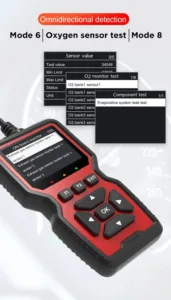
This code indicates that the vehicle’s Engine Control Module (ECM) or Powertrain Control Module (PCM) has detected a misalignment or synchronization issue between the crankshaft and the camshaft(s) on engine Bank 1. The engine position system relies on signals from the Crankshaft Position (CKP) sensor and the Camshaft Position (CMP) sensor(s) to create a virtual angle counter, which tells the ECM the precise position of the pistons and valves. When the ECM calculates that the camshaft(s) on Bank 1 are out of sync with the crankshaft for a sustained period (typically more than 10 seconds), it triggers code P0008, illuminates the Check Engine Light, and may put the engine into a limp mode. The first step in addressing this issue is always to use a professional obd2 scanner to confirm the code and check for any related codes that can provide further clues.
Symptoms of Error Code P0008
- Illuminated Check Engine Light (MIL).
- Engine runs rough, misfires, or experiences noticeable vibration and shaking.
- Lack of power, hesitation, or poor acceleration.
- Reduced fuel economy.
- Engine may be difficult to start or may stall.
- In some cases, the vehicle may enter a reduced-power “limp home” mode.
Main Causes of Error Code P0008
- Faulty Crankshaft Position (CKP) Sensor.
- Faulty Camshaft Position (CMP) Sensor (for Bank 1).
- Worn, stretched, or jumped timing chain or timing belt.
- Worn timing chain guides, tensioners, or sprockets.
- Problems with the Variable Valve Timing (VVT) system or oil control valve on Bank 1.
- Wiring issues (open circuits, short circuits, poor connections) in the CKP or CMP sensor circuits.
- Low engine oil pressure or incorrect oil viscosity affecting VVT operation.
- Mechanical engine damage causing misalignment (e.g., damaged keyway on crankshaft sprocket).
- Faulty Engine Control Module (ECM/PCM) (rare).
How to Diagnose Error Code P0008?
- Scan for Codes: Connect a capable car code scanner to the vehicle’s OBD-II port. Confirm the presence of P0008 and note any other related codes (like P0009, P0016-P0019).
- Check Freeze Frame Data: Use your scanner to view freeze frame data stored when the code was set. Note engine RPM, temperature, and load conditions.
- Inspect Engine Oil: Check the oil level and condition. Low oil level or dirty oil can affect the VVT system, which is often linked to timing issues.
- Visual Inspection:
- Inspect the wiring harness and connectors for the CKP and CMP sensors for damage, chafing, or corrosion.
- Listen for unusual rattling or slapping noises from the timing chain cover, which could indicate a worn chain or tensioner.
- Check Sensor Signals:
- Using a digital multimeter and/or an oscilloscope, test the CKP and CMP sensors for proper resistance, reference voltage, and signal output according to the vehicle’s service manual.
- Many advanced obd2 code scanners can display live data for these sensors. Check if the signals are present and stable.
- Check Timing: This is a critical step. Consult the service manual for the procedure to verify camshaft-to-crankshaft timing. This often involves removing the timing cover and aligning timing marks on the crankshaft and camshaft sprockets.
- Test VVT System (if equipped): Use a scan tool to command the VVT solenoid and monitor camshaft position change. Check the VVT oil control valve for proper operation and oil flow.
- Clear Codes and Test Drive: After any initial checks or repairs, clear the codes with your obd code reader and perform a test drive to see if the code returns.
Possible Causes and Diagnostic Methods
| Possible Cause | How to Check? |
| Faulty Crankshaft Position Sensor | Measure sensor resistance with a multimeter. Check for a clean, consistent AC voltage signal while cranking the engine. Inspect the sensor tip for debris and the reluctor ring for damage. |
| Faulty Camshaft Position Sensor | Perform similar resistance and signal checks as the CKP sensor. Use a scan tool to monitor the camshaft position actuator command and actual position. |
| Timing Chain/Belt Issue | Remove the timing cover and visually inspect the chain/belt for wear, slack, or misaligned timing marks. Check chain tensioner for proper extension. |
| VVT Solenoid/Oil Control Valve Issue | Remove the solenoid and check its screen for clogging. Test solenoid operation (electrical resistance and mechanical movement) when commanded by a scan tool. |
| Wiring/Connector Problem | Perform a continuity test on the wires between the sensor connectors and the ECM. Check for shorts to power or ground. Wiggle the harness while monitoring sensor data. |
Tools needed: A professional-grade obd2 scanner or car code reader capable of reading live data and actuating components, a digital multimeter (DMM), a mechanics stethoscope, basic hand tools, and the vehicle-specific service manual for specifications and procedures.
How do I fix error code P0008? (Solutions to the Problem)
Simple Fixes
- Clean the electrical connectors for the CKP and CMP sensors with electrical contact cleaner and ensure they are securely fastened.
- Top up or change the engine oil and filter if the oil is low or excessively dirty, as this can restore proper VVT system operation.
- Reset the code with your car code scanner after addressing simple issues to see if it returns.
In-depth Diagnosis and Repair Solutions
- Replace Faulty Sensors: If testing confirms a bad Crankshaft Position Sensor or Camshaft Position Sensor, replace it with an OEM or high-quality equivalent.
- Repair Timing Components: If the timing chain is stretched, guides are broken, or the tensioner is failed, a complete timing chain kit replacement is necessary. This is a major repair.
- Replace VVT Solenoid/Oil Control Valve: A clogged or stuck VVT solenoid is a common fix. Replace it and ensure clean oil passages.
- Repair Wiring Harness: Repair or replace any damaged wires or connectors in the sensor circuits.
- Re-time the Engine: If the timing is off by one or more teeth, the engine must be re-timed according to manufacturer specifications. This often requires special tools.
- After completing repairs, clear all codes with your obd2 diagnostic scanner and perform a thorough test drive to ensure the problem is resolved.
Fix faults based on symptoms
| Symptom Pattern | Recommended Repair Path |
| Code P0008 appears with engine rattling noise from the front cover. | Strong indicator of timing chain wear or tensioner failure. Focus on inspecting and likely replacing the timing chain assembly. |
| Code appears intermittently, especially when the engine is hot. | Points towards a failing sensor or a wiring issue that worsens with heat. Perform sensor tests and a wiggle test on the harness. |
| Code P0008 is present with poor performance but no unusual noises. | Likely a sensor fault (CKP or CMP) or a VVT solenoid issue. Diagnose sensors and the VVT system with a scan tool. |
| Code appears immediately after an oil change or using the wrong oil. | Suggests the VVT system is affected by incorrect oil viscosity or low oil level. Verify oil type and level. |
Common Error Code P0008 in Vehicles
General Motors (Chevrolet, GMC, Buick, Cadillac): Very common in vehicles with the 3.6L V6 (LLT, LFX, LGX engines) and 5.3L/6.2L V8 engines (Ecotec3). Issues often stem from stretched timing chains, failed chain tensioners, or faulty VVT solenoids. Models like the Chevrolet Traverse, Equinox, Malibu, Silverado; GMC Acadia, Sierra; and Cadillac CTS are frequently affected.
Ford (Escape, Fusion, F-150 with EcoBoost engines): Timing chain stretch on the 1.6L and 2.0L EcoBoost engines is a known issue that can trigger P0008. Also check for oil feed issues to the VVT solenoids.
Chrysler/Dodge/Jeep (Pentastar 3.6L V6): The 3.6L Pentastar engine can set P0008 due to problems with the camshaft position sensor or issues within the variable valve timing system.
Honda/Acura (J-series V6 engines): While less common, P0008 can appear on older Honda V6 models, often related to timing belt service being overdue or a failing camshaft position sensor.
BMW (N20, N55, B58 engines): Known for timing chain guide failures on certain N20 4-cylinder and N55 inline-6 engines, which can lead to chain slack and trigger codes like P0008.
Nissan/Infiniti (VQ series V6 engines): Can experience camshaft position sensor failures or timing chain guide wear that leads to this code.
P0008 Frequently Asked Questions
Is it safe to drive with a P0008 code?
It is not recommended. A P0008 code indicates the engine’s timing may be off, which can lead to poor performance, increased emissions, and in severe cases, cause the pistons to contact the valves, resulting in catastrophic engine damage. Drive only as necessary to reach a repair facility.
Can I use a basic car code reader to diagnose P0008?
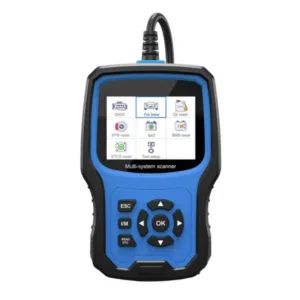
A basic car code reader can confirm the presence of the P0008 code and clear it. However, for proper diagnosis, you need an advanced obd2 scanner that can display live data from the Crankshaft and Camshaft Position sensors, as well as actuate components like the VVT solenoid for testing.
How much does it cost to fix a P0008 code?
Costs vary widely: Replacing a sensor: $200-$500. Replacing a VVT solenoid: $300-$700. A full timing chain replacement is a major job costing $1,500 to $3,000 or more, depending on the vehicle. Diagnosis typically costs $100-$200.
Can a bad battery cause a P0008 code?
While unlikely to be the direct cause, a weak battery or poor electrical connections can cause voltage fluctuations that might lead to erratic sensor signals, potentially triggering various codes. Always ensure the battery and charging system are in good health during diagnosis.
What is the difference between P0008 and P0016?
P0008 indicates a general performance issue with the engine position system on Bank 1. P0016 is more specific, indicating a correlation fault between the Crankshaft Position sensor and the Camshaft Position sensor for Bank 1. P0016 often points more directly to a mechanical timing problem.
Will disconnecting the battery clear a P0008 code?
Disconnecting the battery may clear the code and turn off the Check Engine Light temporarily, but if the underlying problem is not fixed, the code will return once the drive cycle completes. Using an obd code reader to clear the code is the proper method after repairs.
Can low oil cause P0008?
Yes, absolutely. Many modern engines use engine oil pressure to actuate the Variable Valve Timing system. Low oil level, dirty oil, or incorrect oil viscosity can prevent the VVT system from functioning correctly, causing the camshaft timing to be off and triggering P0008.
What should I check first when I get a P0008 code?
First, use your obd2 code scanner to check for any other related codes. Then, check the engine oil level and condition immediately. Visually inspect the wiring to the CKP and CMP sensors. These are quick, non-invasive checks that can sometimes reveal the problem.
P0008 Related OBD2 Errors
- P0009: Engine Position System Performance (Bank 2)
- P0016: Crankshaft Position – Camshaft Position Correlation (Bank 1 Sensor A)
- P0017: Crankshaft Position – Camshaft Position Correlation (Bank 1 Sensor B)
- P0018: Crankshaft Position – Camshaft Position Correlation (Bank 2 Sensor A)
- P0019: Crankshaft Position – Camshaft Position Correlation (Bank 2 Sensor B)
- P0340: Camshaft Position Sensor “A” Circuit (Bank 1 or Single Sensor)
- P0335: Crankshaft Position Sensor “A” Circuit Malfunction
Important! Code P0008 often indicates a potential mechanical issue with the engine’s timing. Ignoring it can lead to severe and expensive engine damage, such as bent valves if the timing is severely off. While initial checks with a car code scanner are a good start, diagnosis often requires mechanical expertise and specialized tools. If you are not experienced in engine timing procedures, it is strongly advised to seek professional mechanical help to avoid causing further damage.