
What does the P0004 code mean?
The P0004 is a generic OBD-II (Onboard Diagnostics II) trouble code. Its official definition is “Fuel Volume Regulator Control Circuit High“.
This code indicates that the vehicle’s Powertrain Control Module (PCM) or Engine Control Module (ECM) has detected that the voltage signal in the Fuel Volume Regulator (FVR) control circuit is higher than the expected or specified range. The FVR, also known as a fuel metering valve or fuel control valve, is a solenoid-operated component typically mounted on the high-pressure fuel pump in modern Common Rail Diesel (CRD) and Gasoline Direct Injection (GDI) systems. Its primary function is to precisely regulate the volume of fuel entering the high-pressure pump, which is critical for maintaining correct rail pressure. A “high” circuit condition suggests an electrical fault such as a short to voltage (power), an open circuit with high resistance, or a failing PCM driver circuit that is not properly grounding the signal. The first step in any diagnosis is to use a professional obd2 scanner to confirm the code and check for related faults like P0001, P0002, or P0003.
Symptoms of Error Code P0004
When the P0004 code is stored, drivers may experience one or more of the following symptoms:
- Illuminated Check Engine Light (MIL): The most immediate and common indicator.
- Reduced Engine Power (Limp Mode): The PCM may limit engine RPM and power output to protect the engine from potential damage caused by incorrect fuel delivery.
- Hard Starting or No-Start Condition: The engine may crank but fail to start, or require extended cranking times due to improper fuel pressure regulation.
- Engine Hesitation, Stumbling, or Stalling: The vehicle may hesitate during acceleration, run roughly, or stall unexpectedly, especially at idle or low speeds.
- Poor Fuel Economy: Incorrect fuel metering can lead to a noticeable decrease in miles per gallon (MPG).
- Rough or Unstable Idle: The engine may idle erratically, with RPMs fluctuating.
- Black Smoke from Exhaust (Diesel Engines): Caused by an overly rich air-fuel mixture due to improper fuel regulation.
- Fuel Odor: In some cases, a smell of fuel may be present.
Main Causes of Error Code P0004
- Short to Voltage in Wiring Harness: The most common cause. A wire in the FVR control circuit has come into contact with a power source (e.g., another 12V wire), causing the signal voltage to be pulled high.
- Open Circuit with High Resistance: A break or severe corrosion in the wiring or connector creates very high resistance, which the PCM interprets as a high voltage signal.
- Faulty Fuel Volume Regulator (FVR) Solenoid: The internal coil of the regulator can fail, developing an open circuit or extremely high internal resistance.
- Poor Electrical Connection: Loose, corroded, or damaged connectors at the FVR or PCM can create an intermittent open circuit, leading to a high voltage reading.
- Failing Powertrain Control Module (PCM): An internal fault in the PCM’s driver circuit for the FVR can prevent it from properly pulling the signal to ground, resulting in a constant high signal.
- Issues with Related Sensors: A faulty fuel pressure sensor providing incorrect readings can cause the PCM to misinterpret the state of the FVR circuit.
- Problems with the High-Pressure Fuel Pump (HPFP): Mechanical failure within the pump can sometimes affect the electrical characteristics of the integrated volume regulator.
How to Diagnose Error Code P0004?
- Confirm the Code and Check for TSBs: Use an advanced obd2 code reader to read the P0004 code and any other stored codes. Check for Technical Service Bulletins (TSBs) related to the fuel volume regulator for your specific vehicle make, model, and year.
- Perform a Thorough Visual Inspection: With the engine off, locate the Fuel Volume Regulator on the high-pressure fuel pump. Carefully inspect all associated wiring harnesses and connectors for obvious damage, chafing, corrosion, burns, or disconnection. Pay special attention to areas where wiring passes near sharp edges, heat sources, or other wiring looms.
- Check Fuses and Relays: Consult the vehicle’s fuse diagram and check all fuses and relays related to the fuel system, fuel pump control module, and engine control unit. A blown fuse can sometimes be a symptom of a deeper short circuit.
- Electrical Circuit Testing:
- Disconnect the electrical connector at the FVR.
- Using a digital multimeter, check for power supply voltage (typically 12V with ignition on) at the appropriate pin on the harness side. Ensure it is stable and at battery voltage.
- Check for a proper ground circuit.
- Perform a continuity test on the control wire back to the PCM connector to check for opens.
- Check for a short to voltage on the control circuit wire. With the connector disconnected and ignition on, check for voltage on the control wire. There should be none if the circuit is healthy.
- Measure the resistance to ground on the control wire; it should be very high (open circuit).
- Component Testing (Fuel Volume Regulator): Measure the resistance (in ohms) across the two terminals of the FVR solenoid. Compare the reading to the manufacturer’s specifications (often between 3-20 ohms, but this varies widely). A reading significantly higher than specification or “OL” (Open Loop) indicates an internal open in the solenoid, confirming it is faulty.
- Active Control Test with Scan Tool: If your vehicle diagnostics tool has bidirectional controls, command the FVR duty cycle while monitoring live data parameters like desired vs. actual fuel rail pressure. Observe if the regulator responds and if pressure changes accordingly. A lack of response can indicate a faulty regulator or open circuit.
- Fuel System Pressure Test: Perform mechanical fuel pressure tests on both the low-pressure (feed) side and the high-pressure (rail) side to rule out a failing fuel pump or other mechanical restrictions that could be influencing the electrical feedback.
- PCM Driver Test: If all wiring and the component test perfectly (correct resistance, no shorts to voltage), and power/ground are confirmed, testing the PCM’s ability to ground the circuit may be necessary. This often requires an oscilloscope to view the control signal waveform or professional diagnostic equipment.
Possible Causes and Diagnostic Methods
| Possible Cause | How to Check? |
| Short to Voltage in Wiring | With the FVR connector disconnected and ignition ON, check for voltage on the control circuit wire. Any voltage indicates a short to power. Trace the harness for damaged insulation contacting a live wire. |
| Open Circuit / High Resistance | Perform a voltage drop test on the control circuit with the component connected. Also, measure the resistance of the wire from the FVR connector back to the PCM pin. High resistance indicates corrosion or a break. |
| Faulty Fuel Volume Regulator Solenoid | Measure solenoid resistance with a multimeter. A reading far above manufacturer spec or “OL” indicates an internal open circuit. |
| Corroded or Loose Connector | Inspect connector pins for green/white corrosion, bent pins, or poor seating. Clean with electrical contact cleaner and ensure a tight connection. |
| Failing PCM Driver Circuit | If all other tests pass, use an oscilloscope to check for a proper square wave duty cycle signal from the PCM on the control wire. A constant high signal indicates a faulty PCM. |
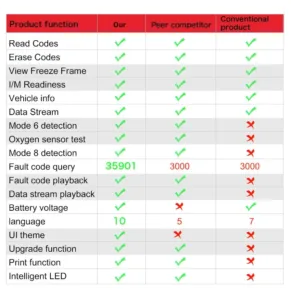
Tools needed: A professional-grade obd2 scanner with live data and bidirectional control capability, a high-quality digital multimeter, an oscilloscope (for advanced diagnosis), a fuel pressure test kit, basic hand tools, and vehicle-specific wiring diagrams.
How do I fix error code P0004? (Solutions to the Problem)
Simple Fixes
- Repair Damaged Wiring: If a short to voltage or an open wire is found, repair it properly using solder and heat-shrink tubing. Ensure the repair is insulated and secure.
- Clean or Replace Connectors: Clean corroded connector pins with electrical contact cleaner and a brush. If pins are damaged, replace the connector housing or repair the terminals.
- Check and Secure Ground Points: Ensure the ground connection for the FVR circuit (if separate) is clean, tight, and has good contact with the chassis.
In-depth Diagnosis and Repair Solutions
- Replace the Fuel Volume Regulator: If resistance testing confirms the solenoid is open (infinite resistance), the FVR must be replaced. This often requires removing the high-pressure fuel pump. Always use an OEM or high-quality equivalent part and replace seals/gaskets.
- Repair or Replace the Wiring Harness Section: For extensive wire damage or a confirmed short to voltage within the harness, replacing the affected section is the most reliable repair. Use proper gauge wire and follow the original routing.
- Address PCM Issues: If the PCM driver circuit is confirmed faulty, the PCM may require replacement. This is a complex and costly procedure that requires specialized programming (VIN programming, parameterization) to match the vehicle. In some cases, a reflash (software update) may resolve the issue.
- After any repair, clear all codes with your car scanner, perform a comprehensive test drive that includes various load conditions (idle, acceleration, cruise), and re-scan to ensure the P0004 code does not return. Monitor live fuel pressure data during the drive.
Common Error Code P0004 in Vehicles
Ford (Power Stroke Diesel 6.7L & EcoBoost Gasoline – F-Series, Super Duty, Transit, Explorer): Extremely common. In the 6.7L Power Stroke, the Fuel Control Actuator (FCA) on the high-pressure pump is prone to failure, often due to internal opens or shorts to voltage in its wiring harness near the turbocharger. In EcoBoost engines (2.7L, 3.5L), the fuel metering valve on the HPFP can fail. A known issue is chafing of the FCA wiring against the valve cover or other components.
General Motors (Duramax Diesel LML, L5P – Chevrolet Silverado, GMC Sierra): Prevalent. The Fuel Volume Control Valve (FVCV) on the CP4.2 high-pressure pump can fail internally, causing an open circuit. Wiring harness issues at the pump connector, often due to heat and vibration, are also common causes of high circuit codes.
Ram/Cummins (6.7L Cummins Turbo Diesel – Ram 2500/3500): A frequent code. Often related to the Fuel Control Actuator on the high-pressure pump. The actuator’s internal coil can develop an open circuit. Also check the wiring harness passing near the EGR cooler and intake manifold for heat damage.
Volkswagen/Audi Group (TDI Diesel CJAA/CKRA, TSI/TFSI GDI – Golf, Jetta, Passat, A4, Q7): Common. The fuel metering valve (N290) on the high-pressure pump is a typical failure point, often failing open circuit. Diagnosis is best performed with VCDS/VAG-COM to access specific measuring values (MVB) for the valve’s current and duty cycle.
BMW (N47, N57, B47/B57 Diesel, B48/B58 Gasoline – 3 Series, 5 Series, X3, X5): Seen in diesel models with the N57 engine; the quantity control valve on the HPFP can develop an internal open. On gasoline models like the B58, issues with the high-pressure fuel sensor or its circuit can cause related codes, but a pure P0004 often points to the valve or its wiring.
Mercedes-Benz (OM642, OM651 Diesel – Sprinter, E-Class, ML, GLK): The fuel quantity control valve (Y94/1) on the high-pressure pump is a known wear item. Failure often presents as an internal open circuit. Corroded connectors in the engine bay, especially on older models, are also a common culprit for high resistance.
Toyota/Lexus (1KD-FTV, 2GD-FTV D-4D Diesel – Hilux, Land Cruiser Prado, Lexus IS 220d): In diesel models, the suction control valve (SCV) on the fuel pump is a common failure that can trigger this code. The valve can stick open or its coil can fail. Requires a professional scanner for Toyota-specific diagnostics and often requires calibration after replacement.
Honda/Acura (Earth Dreams 1.5L/2.0L GDI – Civic, Accord, CR-V): Can occur, though less common than in diesels. Particularly noted in 2015-2018 Honda Civic 1.5L Turbo models. Check the low-pressure fuel sensor circuit and the high-pressure fuel pump control system using the Honda Diagnostic System (HDS) or an advanced aftermarket tool. The fuel metering valve is part of the HPFP assembly.
Nissan/Infiniti (YD25 Diesel, VR30DDTT – Frontier, Titan, Q50, Q60): In the YD25 diesel engine, the fuel suction control valve is a typical failure point. On the VR30 twin-turbo gasoline engine, check the high-pressure fuel system sensors and wiring for opens or shorts to power, especially near the turbochargers.
Subaru (EE20 Boxer Diesel, FA/FB DIT – Outback, Forester, WRX): In diesel models, the fuel metering valve on the pump can fail open. In turbocharged gasoline DIT engines, monitor fuel pressure parameters and check for wiring issues, particularly where the harness passes near the turbocharger heat shield.
Mazda (Skyactiv-D Diesel, Skyactiv-G Turbo – CX-5, Mazda6, CX-60): In Skyactiv-D models, the fuel supply control valve is critical. Internal open circuits are a known failure mode. The valve is often sensitive to fuel contamination.
Hyundai/Kia (CRDi Diesel R, Smartstream GDI – Santa Fe, Sorento, Stinger, Sportage): Common in CRDi diesel engines (e.g., 2.2L R engine). The fuel control valve on the high-pressure pump can fail. Use a professional vehicle code reader to check fuel system live data like rail pressure sensor readings and valve control duty cycle for inconsistencies.
Peugeot/Citroën (DV/DLD Diesel Engines – 308, 508, 3008, C4 Picasso): The fuel doseur valve on the high-pressure pump (often Siemens or Bosch) is a very common failure, leading to P0004 and significant drivability issues like no-start conditions. The valve’s electrical connector is also prone to corrosion.
Land Rover/Jaguar (Ingenium Diesel D240/D300, AJ-V8 – Range Rover, Discovery, F-Pace, XF): The Ingenium diesel engines are prone to high-pressure fuel system issues. The fuel metering valve and its control circuit require careful electrical diagnosis for opens or shorts to voltage. Wiring issues in the complex engine bay are not uncommon.
Volvo (VEA Diesel Engines D4/D5 – XC60, XC90, S90): The fuel pressure regulator valve on the high-pressure pump can malfunction, requiring replacement of the valve or the entire pump assembly. Diagnose with Volvo’s VIDA system or a capable aftermarket scanner.
Fiat/Chrysler (MultiJet Diesel, 3.0L EcoDiesel – 500X, Renegade, Dodge Dart, Ram 1500): The fuel pressure regulator on the Bosch CP4 pump is a known failure point, often causing a high circuit code. Also check the wiring to the fuel pump control module.
Mitsubishi (4N1 Diesel – Outlander, ASX): The fuel suction control valve on the high-pressure pump can fail, setting P0004. Common in models from the early to mid-2010s.
Isuzu (4JJ1, 4HK1 Diesel – D-Max, NPR Truck): The fuel metering valve on the common rail pump is a serviceable item. Failure results in high circuit codes and poor performance.
Mahindra & Other Tractors/Commercial Vehicles: P0004 is defined as “Short Circuit to Battery of Metering Unit Output” in many agricultural and industrial diesel engines, pointing directly to a short to power in the fuel metering actuator circuit.
P0004 Frequently Asked Questions
What is the first thing I should do when I see code P0004?
Use a reliable obd2 scanner to confirm the P0004 code is present and check for any other related codes (like P0001, P0002, P0003, P0087, P0088). Note the freeze frame data to see the engine conditions (RPM, load, temperature) when the fault occurred. Then, perform a basic but thorough visual inspection of the wiring and connectors at the fuel volume regulator and along its entire harness path.
Is it safe to drive my car with the P0004 code?
It is strongly not recommended. The vehicle is likely in a reduced-power limp mode to prevent damage. More importantly, an underlying short to voltage could potentially damage the PCM, and erratic fuel delivery can cause stalling, creating a serious safety hazard. Drive only if absolutely necessary and with extreme caution to a repair facility.
My code is P0004. What do the related codes P0001, P0002, and P0003 mean?
These are all part of the same diagnostic family (Fuel Volume Regulator “A” Control Circuit). P0001 indicates a “Circuit/Open” (complete break or extremely high resistance). P0002 indicates a “Range/Performance” problem (signal is present but outside the expected operating range). P0003 indicates a “Circuit Low” condition (signal voltage too low, often a short to ground). P0004 indicates a “Circuit High” condition (signal voltage too high, often a short to power or an open circuit).
Will disconnecting the battery clear the P0004 code?
Disconnecting the battery may clear the code and turn off the light temporarily by resetting the PCM’s memory. However, if the underlying electrical fault (like a shorted wire or open component) is still present, the code will almost certainly return once the PCM completes its self-tests during the next drive cycle. Clearing codes without fixing the problem is ineffective.
How much does it typically cost to repair a P0004 error?
Costs vary significantly based on the root cause and vehicle: Diagnostic fee: $100-$200. A new Fuel Volume Regulator: $150-$500. Labor for replacement (often requires removing the HPFP): 2-5 hours ($200-$750). Wiring harness repair: $150-$400. If the PCM needs replacement: $800-$2,500+ including programming. If the high-pressure fuel pump itself needs replacement: $1,500-$4,000+. Total can range from $200 for a simple wiring repair to over $5,000 for a full pump and PCM replacement on a luxury vehicle.
Can I replace the fuel volume regulator myself to fix P0004?
This is an advanced repair. It requires working on the high-pressure fuel system, which operates at pressures exceeding 20,000 psi (diesel) or 2,000 psi (gasoline). You must follow strict safety procedures to depressurize the system. Special tools are often needed to remove the pump, and proper sealing is critical. If you are not experienced with fuel systems, electrical diagnostics, and have the correct service information, this job is best left to a qualified technician.
Why is P0004 considered an electrical “high” code?
In OBD-II terminology for a control circuit, “High Input” means the PCM is monitoring the circuit voltage and sees it remaining at or near battery voltage (e.g., 12V) when it should be pulled low (near 0V) by the PCM’s internal driver transistor to activate the solenoid. This indicates the PCM cannot ground the circuit, either because the wire is shorted to a constant power source, the solenoid is open (infinite resistance), or the PCM’s driver is faulty.
Can a weak battery or charging system cause a P0004 code?
Unlikely to be the direct cause. A P0004 is specifically for a high signal on the FVR control circuit. However, severe voltage spikes from a failing alternator regulator could theoretically damage the PCM or create transient voltage issues that might be logged. Low system voltage would more likely cause multiple, unrelated low-voltage codes, not an isolated P0004.
What’s the difference between diagnosing P0004 and P0001?
Both indicate a problem completing the circuit, but the expected electrical state is opposite. P0001 (Open Circuit) is diagnosed by looking for a complete break (infinite resistance) where there should be continuity. P0004 (Circuit High) is often an open circuit as well, but the diagnostic clue is that the PCM sees a high voltage when it tries to pull the line low. The multimeter test for the component (high resistance) might be the same, but the circuit diagnosis focuses on checking for shorts to power (P0004) versus simple breaks (P0001).
My car scanner shows “P0004 – Fuel Volume Regulator Control Circuit High”. Does this always mean the regulator is bad?
No. While an open-circuit regulator solenoid is a common cause, the problem is just as likely (if not more so) to be a wiring fault. A short to voltage on the control wire or a corroded/open connection in the harness will produce the exact same code. Proper electrical diagnosis is required to pinpoint the exact fault location before replacing parts.
After fixing the wiring or replacing the regulator, do I need to do anything special?
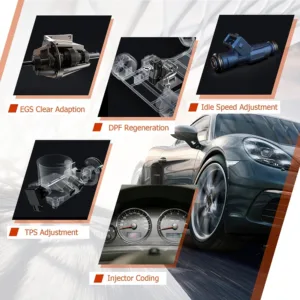
Clear the codes with your scanner. The vehicle may need to complete a few “drive cycles” for the PCM to run all its self-tests and turn off the MIL. Some vehicles, especially European brands, may require a PCM adaptation or learning procedure after replacing the FVR (e.g., “Fuel Pressure Control Valve Adaptation”). Your vehicle diagnostics tool should be able to perform this if it has the right software and protocols.
How can I prevent the P0004 code from happening again?
Ensure any wiring repairs are done properly with sealed connectors and secure routing away from heat and sharp edges. Use high-quality fuel to minimize contamination and wear on the valve. Change fuel filters at the manufacturer’s recommended intervals. For diesel vehicles, using a reputable fuel additive designed to lubricate the injection system can help prolong the life of the FVR and pump.
My code is intermittent—the light comes on and off. What does that mean?
An intermittent P0004 often indicates a wiring problem that is only sometimes making contact—a wire that is frayed and occasionally shorting to a nearby power wire, or a loose connector that intermittently creates an open circuit. The diagnostic steps are the same, but you may need to wiggle wires and connectors while monitoring live data or the code status with your obd2 scanner to reproduce the fault.
Can a clogged fuel filter cause a P0004 code?
Not directly. A clogged fuel filter is a mechanical restriction, not an electrical fault. However, severe fuel starvation can cause the fuel pressure to fall outside parameters, which may cause the PCM to attempt extreme corrections via the FVR. If the regulator is already marginal or the circuit has high resistance, this added electrical demand could contribute to an open circuit condition being detected. More commonly, a clogged filter will set fuel pressure-related codes (like P0087) rather than a circuit high code.
What tools do I absolutely need to diagnose P0004?
At a minimum: A capable OBD-II scan tool (vehicle code reader) to read codes and view live data. A high-quality digital multimeter for voltage, resistance, and continuity checks. A wiring diagram for your specific vehicle is invaluable. For reliable diagnosis: A mechanic’s stethoscope (to listen for the regulator clicking when commanded). An oscilloscope to view the control signal waveform is extremely helpful for confirming PCM output and identifying intermittent opens.
Is P0004 more common in diesel or gasoline engines?
It is significantly more common in diesel engines, particularly those with Common Rail Direct Injection (CRDi). This is because diesel high-pressure fuel systems operate at much higher pressures and rely more heavily on precise electronic control of the fuel volume regulator (often called a metering valve or suction control valve) to manage rail pressure. However, it also occurs in modern Gasoline Direct Injection (GDI/Turbo GDI) engines which use similar high-pressure pump technology.
P0004 Related OBD2 Errors
- P0001: Fuel Volume Regulator Control Circuit/Open
- P0002: Fuel Volume Regulator Control Circuit Range/Performance
- P0003: Fuel Volume Regulator Control Circuit Low
- P0087: Fuel Rail/System Pressure – Too Low
- P0088: Fuel Rail/System Pressure – Too High
- P0190: Fuel Rail Pressure Sensor Circuit Malfunction
- P0090: Fuel Pressure Regulator 1 Control Circuit
- P00C6: Fuel Rail Pressure Too Low – Engine Cranking
- P053F: Cold Start Fuel Pressure Performance
Important Safety Warning: The high-pressure fuel system is extremely dangerous. Always depressurize the system according to the manufacturer’s specific procedure before servicing any components. Never open fuel lines while the system is pressurized. Wear appropriate eye protection. If you are unsure about any step, consult a professional technician.