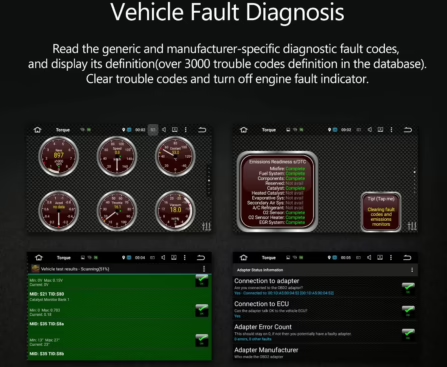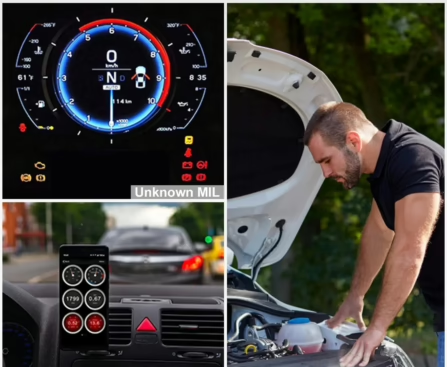
The P013E is a generic OBD-II powertrain trouble code. Its official definition is “O2 Sensor Delayed Response – Rich to Lean (Bank 1, Sensor 2)”. This code is stored by the vehicle’s Engine Control Module (ECM) when it detects that the downstream oxygen sensor (Bank 1, Sensor 2) has an excessive initial delay in its response time as the exhaust gas composition transitions from a rich (low oxygen) state to a lean (high oxygen) state.
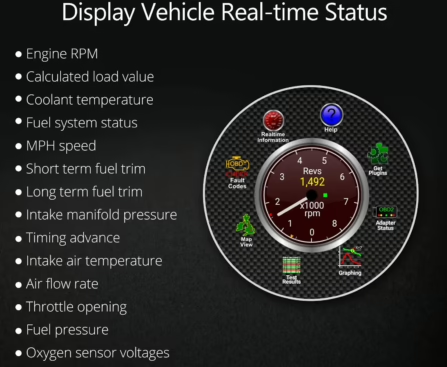
The P013D is a generic OBD-II powertrain trouble code. Its official definition is “O2 Sensor Slow Response – Lean to Rich (Bank 2, Sensor 2)”. This code is stored by the vehicle’s Engine Control Module (ECM) when it detects that the downstream oxygen sensor on engine Bank 2 takes too long to respond as the exhaust gas composition changes from a lean (high oxygen) state to a rich (low oxygen) state. The downstream sensor, located after the catalytic converter, is crucial for monitoring catalyst efficiency.
The P013C is a generic OBD-II powertrain trouble code. Its official definition is “O2 Sensor Slow Response – Rich to Lean (Bank 2, Sensor 2)”.
The P013B is a generic OBD-II powertrain trouble code. Its official definition is “O2 Sensor Slow Response – Lean to Rich (Bank 1, Sensor 2)”.
The P013A is a generic OBD-II powertrain trouble code. Its official definition is “O2 Sensor Slow Response – Rich to Lean (Bank 1, Sensor 2)”.
The P0139 is a generic OBD-II powertrain trouble code. Its official definition is “O2 Sensor Circuit Slow Response (Bank 1, Sensor 2)”.OBDII P0139 fault causes, symptoms, repair
The P0138 is a generic OBD-II powertrain trouble code. Its official definition is “O2 Sensor Circuit High Voltage (Bank 1, Sensor 2)”.
The P0137 is a generic OBD-II powertrain trouble code. Its official definition is “O2 Sensor Circuit Low Voltage (Bank 1, Sensor 2)”.