Hidden dash cams, like all automotive electronics, face significant challenges in extreme temperatures. Their performance and longevity are directly tested by the intense heat of a parked car in summer and the deep cold of winter mornings. The key to reliable operation lies in specific engineering choices, particularly the use of supercapacitors over batteries, robust thermal design, and adherence to strict environmental testing standards.

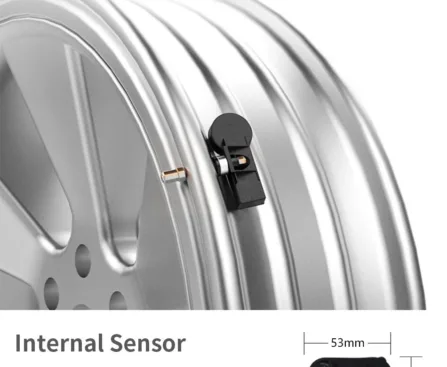
For most riders seeking optimal reliability and accuracy, internal TPMS sensors are the superior choice. However, the best option depends on your specific priorities: internal sensors offer better performance and security, while external sensors provide easier installation and lower upfront cost.
The car cigarette lighter socket, now more commonly used as a 12V power outlet, is a versatile feature for powering devices and, in some vehicles, still functions as its namesake. Understanding its proper use and knowing how to troubleshoot a failure are essential skills for any driver. This guide provides a comprehensive, step-by-step breakdown of both topics.
The B0093 is a generic OBD-II Body (B) system diagnostic trouble code. Its official definition is “Left Side Restraints Sensor 3 (Subfault)”
The B0092 is a generic OBD-II Body (B) system diagnostic trouble code. Its official definition is “Left Side Restraints Sensor 2 (Subfault)
The B0091 is a generic OBD-II Body (B) system diagnostic trouble code. Its official definition is “Left Side Restraints Sensor 1 (Subfault)”. This code is stored by the vehicle’s Restraints Control Module (RCM) or Supplemental Restraint System (SRS) control module when it detects a fault in the circuit or operation of the left side restraints sensor 1.
The B0090 is a generic OBD-II Body (B) system diagnostic trouble code. Its official definition is “Left Frontal Restraints Sensor (Subfault)