
What is the P00A3 Trouble Code?
P00A3 is a generic diagnostic trouble code (DTC) applicable to all vehicle manufacturers, meaning “Charge Air Cooler Temperature Sensor Circuit High (Bank 2).”
Background Knowledge: A turbocharger uses the inertial force of the engine’s exhaust gases to drive a turbine, which in turn drives a coaxial impeller to compress the intake air, thereby increasing engine power. The charge air cooler (also known as an intercooler) is used to cool the compressed air exiting the turbocharger. After passing through the turbo, the air pressure increases and its temperature rises. The charge air cooler reduces the temperature of this compressed air, increasing air density and improving volumetric efficiency, with the goal of enhancing engine power and reducing emissions. This code is set when the powertrain control module (PCM) detects a voltage signal from the Bank 2 charge air cooler temperature sensor that is above the expected normal operating range (too high). Potential causes include issues with the sensor itself, its circuit, or connector problems.
Symptoms of the P00A3 OBD-II Trouble Code
The driver may notice little to no immediate drivability issues with P00A3, but in some cases, performance problems can still appear. The most common symptoms include:
- Check Engine Light illuminated on the dashboard
- Reduced engine power or activation of “limp mode” in some vehicles
- Poor acceleration or sluggish throttle response
- Increased fuel consumption
- High intake air temperature (visible on some scan tools)
- Possible turbocharger performance warnings
Common Causes of the P00A3 OBD-II Trouble Code
This DTC is often triggered by an electrical fault rather than a component failure. Here are the most common causes, ordered from most to least likely:
- Faulty charge air cooler temperature sensor (defective sensor itself)
- Open or shorted wiring (damaged, corroded, or disconnected wires or connectors in the sensor circuit)
- Poor electrical connection at the sensor or ECM wiring harness
- Corroded or loose terminals on the sensor connector
- Internal fault in the Engine Control Module (ECM) (rare)
- Aftermarket modifications interfering with the sensor circuit
Step-by-Step Diagnosis for Code P00A3
Diagnosing the root cause of P00A3 requires a systematic approach. Here are the recommended steps:
- Visually inspect the charge air cooler temperature sensor and its wiring for any obvious damage, corrosion, or disconnection.
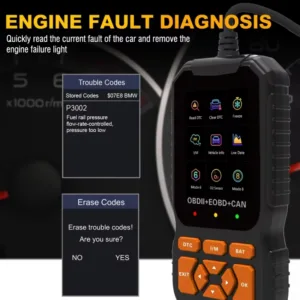
- Use an OBD2 scanner to check for other related codes (especially wiring or sensor circuit codes).
- Test the sensor’s voltage signal at the connector with a digital multimeter. Compare readings to manufacturer specifications.
- Wiggle the wiring harness and connectors while monitoring sensor readings to find intermittent faults.
- Check connector terminals for bent, pushed-out, or corroded pins; clean or repair as needed.
- Check for continuity and short circuits between the sensor and the ECM using a wiring diagram.
- If possible, substitute a known-good sensor to confirm sensor failure.
- If all else checks out, inspect the ECM or consult OEM Technical Service Bulletins (TSBs) for known issues.
Possible Repairs for Code P00A3
Depending on the diagnosed cause, repairs can range from simple to complex. Here are common repair suggestions:
- Replace the faulty intercooler temperature sensor: Basic repair, suitable for DIY or professional mechanics.
- Repair or replace damaged wires or connectors: Requires electrical knowledge; complex harness repairs are best left to professionals.
- Clear electrical shorts or repair open circuits: Often requires professional diagnostics; includes circuit testing and repair.
- Update or reprogram the ECU firmware: Requires professional diagnostic equipment; performed by specialists.
- Address external causes like turbocharger leaks or intercooler damage: May require mechanical intervention depending on severity.
Always verify the repair by clearing the fault code and taking a thorough test drive to ensure the issue is resolved.
Common Vehicles Affected by Code P00A3
This DTC is most common in modern turbocharged gasoline and diesel engines. The following brands and models have a higher incidence of P00A3:
- Ford (F-150 EcoBoost, Escape, Focus ST, Fiesta, Kuga)
- General Motors / Chevrolet (Silverado, Cruze, Equinox, Malibu with turbocharged engines)
- Volkswagen / Audi (Golf, Polo, Jetta, Passat, Audi A3, A4 TSI/TDI) with various turbocharged engines.
- BMW / MINI: 1 Series, 2 Series, 3 Series, X1/X3 with turbocharged gasoline and diesel engines.
- Mercedes-Benz (C-Class, E-Class with turbocharged engines)
- Toyota (Supra, Camry, Highlander with turbocharged engines)
- Peugeot / Citroën: 208, 308, C3 with turbocharged gasoline/diesel engines.
This list is not exhaustive but covers common models where intercooler systems are prominent.
FAQs About Code P00A3
Can I drive my vehicle with OBD-II code P00A3?
- Driving with this fault code is not recommended, as it may lead to further engine damage or reduced performance.
Will resetting OBD-II code P00A3 make it disappear permanently?
- Resetting the code may clear it temporarily, but if the underlying issue isn’t resolved, the code is likely to reappear after some time.
Can a faulty charge air cooler temperature sensor cause other problems in the vehicle?
- Yes, a faulty sensor can lead to incorrect engine timing, poor fuel efficiency, and potential damage to engine components if left unaddressed.
Are there any preventive measures to avoid OBD-II code P00A3 from occurring?
- Regular maintenance checks, including inspections of the charge air cooler temperature sensor and its wiring, can help prevent this fault from occurring unexpectedly.
How long does it take to fix OBD-II code P00A3?
- Repair time varies based on the severity of the issue and part availability, but generally, diagnosing and fixing the problem may take a few hours to a full day.
How much does it usually cost to repair OBD-II code P00A3?
- Repair costs vary depending on the specific cause, but expect parts and labor to range from $100 to $300.
Can a dirty intercooler trigger P00A3?
No. P00A3 relates to the temperature sensor’s circuit, not the cleanliness or mechanical condition of the intercooler itself.
Will clearing the code fix the problem?
Clearing the code may temporarily turn off the warning light, but if the root cause is not addressed, the code will return after the next drive cycle.
Can the P00A3 code go away on its own?
Generally, no. The code will persist until the underlying issue is diagnosed and fixed. However, a minor electrical glitch might temporarily reset if the circuit is cleared or the battery is disconnected.
Why does the P00A3 code return after clearing the circuit?
If the root cause—such as damaged wiring, sensor failure, or a turbocharger leak—isn’t resolved, the error often reappears after the ECU retests the circuit. Thorough diagnosis is key to a lasting fix.
Is P00A3 a serious problem?
While not usually catastrophic, ignoring P00A3 can lead to reduced engine performance, increased fuel consumption, or long-term damage to turbocharged components. Timely attention is recommended.
P00A3 Related Trouble Codes:
- P00A0 – Charge Air Cooler Temperature Sensor Circuit (Bank 2)
- P00A1 – Charge Air Cooler Temperature Sensor Circuit Range/Performance (Bank 2)
- P00A2 – Charge Air Cooler Temperature Sensor Circuit Low (Bank 2)
- P00A4 – Charge Air Cooler Temperature Sensor Circuit Intermittent/Erratic (Bank 2)
In conclusion, understanding the signs and causes of the P00A3 code can help you avoid more serious problems with your vehicle. If you experience related symptoms, it’s advisable to take your vehicle to a trusted mechanic who can properly diagnose and repair a P00A3 trouble code. Remember, maintaining your vehicle’s diagnostic system is crucial for optimal engine performance, durability, and safety.