
What does the B0030 code mean?
The B0030 fault code is a manufacturer-specific OBD-II code, most commonly associated with Ford, Lincoln, and Mercury vehicles. It indicates a problem with the “Right Front Crash Sensor Communication Fault” or a malfunction within the restraints system communication network.
Background Information: This code is part of the Supplemental Restraint System (SRS) or airbag system diagnostics. In modern vehicles, crash sensors located at the front (and sometimes sides) of the vehicle communicate with the Restraints Control Module (RCM) or Airbag Control Module (ACM) via a dedicated network. Code B0030 specifically signals that the RCM has lost communication with, or is receiving implausible data from, the crash sensor located on the right front side of the vehicle. This sensor is critical for detecting frontal impacts; if the RCM cannot trust its signal, it may disable the related airbags and illuminate the warning light.
Symptoms of Error Code B0030
Signs of error B0030 may include:
- Illuminated Airbag Warning Light on the instrument cluster. The light remains solid after startup.
- Message on the driver information display such as “Airbag Fault,” “Service Restraint System,” or similar.
- Potential deactivation of specific airbags, most commonly the passenger-side frontal airbag, to prevent accidental deployment from faulty sensor data.
- No noticeable drivability issues. The vehicle will start, run, and drive normally, as this is a safety system fault, not a powertrain fault.
- Possible intermittent warning light if the fault is due to a loose connection that makes and breaks contact.
Main Causes of Error Code B0030
- Faulty Right Front Crash Sensor: The sensor itself has failed internally due to impact, corrosion, or electronic failure.
- Open or Shorted Wiring Harness: Wires leading to the crash sensor can be cut, pinched, or corroded, interrupting the communication circuit.
- Poor Electrical Connection or Corrosion: The connector at the crash sensor or the RCM can become corroded, bent, or loose.
- Damage from Collision or Repair: The sensor or its wiring may have been damaged in a prior accident that wasn’t properly repaired.
- Water Intrusion: The sensor, mounted low in the front end, can be damaged by flooding or frequent high-pressure washing.
- Faulty Restraints Control Module (RCM): A failure within the RCM itself is less common but possible.
How to Diagnose Error Code B0030?
- Safety First: Always disconnect the negative battery cable and wait at least one minute before inspecting any SRS components to prevent accidental airbag deployment.
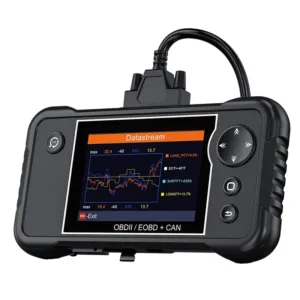
- Use an SRS-capable obd2 scanner to confirm the B0030 code. Check for any other related SRS codes that can help pinpoint the issue.
- Perform a thorough visual inspection of the right front crash sensor area. The sensor is usually a small, sealed module mounted on a bracket near the radiator support or inner fender. Look for physical damage, cut wires, or corrosion in the electrical connector.
- Inspect the wiring from the sensor back to the firewall for damage, especially where it passes through grommets or near moving components.
- Check connector integrity: With the battery still disconnected, carefully unplug the crash sensor connector. Look for bent pins, green/white corrosion, or signs of moisture. Clean with electrical contact cleaner if needed.
- Perform electrical tests (if skilled and with proper diagrams): Test for power and ground at the sensor connector and check the continuity of the communication wires back to the RCM.
- If wiring and connections are good, the crash sensor is likely faulty and needs replacement. They are typically not serviceable and are replaced as a unit.
- After any repair, clear the codes with the scanner. The airbag light should perform a bulb check and then turn off. If it returns, the fault is not resolved.
Possible Causes and Diagnostic Methods
| Possible Cause | How to Check? |
| Faulty Crash Sensor | Visual inspection for damage. The most reliable test is often substitution with a known-good sensor. |
| Damaged Wiring | Inspect the entire harness route. Use a multimeter to check for continuity in each wire and for shorts to power or ground. |
| Corroded Connector | Disconnect and visually inspect all terminals. Clean with contact cleaner. Ensure the connector seals are intact. |
| Poor Ground Connection | Locate and check the ground point for the sensor circuit. Clean any corrosion and ensure it is tight. |
Tools needed: An SRS-capable obd2 scanner, digital multimeter, basic hand tools, wiring diagrams for your specific vehicle, electrical contact cleaner, safety glasses.
How do I fix error code B0030? (Solutions to the Problem)
Simple Fixes
- Clean and reconnect the sensor connector: Disconnect the battery, clean the terminals, apply dielectric grease, and reconnect firmly.
- Repair damaged wiring: If you find a broken or chafed wire, repair it properly with solder and heat-shrink tubing.
- Secure loose ground points: Find, clean, and tighten the ground connection for the sensor circuit.
In-depth Diagnosis and Repair Solutions
- Replace the faulty right front crash sensor: This is the most common repair. Use only an OEM or high-quality equivalent part.
- Replace a damaged section of the wiring harness: For severe damage, replacing the harness is safer than multiple splices.
- Replace the Restraints Control Module (RCM): This is a last resort if all wiring and sensors test perfectly. RCM replacement usually requires a professional scan tool for programming.
- After any repair, use your car code reader to clear all SRS codes and verify the warning light extinguishes correctly.
Troubleshooting Based on Symptoms
| Symptom | Possible Solution |
| Airbag light on solid, code B0030 stored. | Focus on a hard fault: failed sensor or broken wire. Start with a visual inspection at the sensor. |
| Intermittent airbag light, code comes and goes. | Suggests a loose or corroded connection. Inspect and clean the sensor connector and check for wiring that moves with the engine. |
| Code appears after an accident or front-end repair. | The sensor or its wiring was likely damaged. Inspect the repaired area thoroughly. |
Common Error Code B0030 in Vehicles
Ford/Lincoln/Mercury B0030 (2000-2015+ models): Extremely common in Ford F-150, Explorer, Expedition, Mustang, Fusion, Escape, as well as Lincoln Navigators and Town Cars. The right front crash sensor is prone to failure from road debris, corrosion, and vibration. Using a professional-grade obd2 diagnostic scanner is crucial for accessing the RCM module on these vehicles.
General Motors (GM) B0030 Equivalent: GM may use different codes (like B0025, B0051) for similar right front sensor faults. Common in Chevrolet Tahoes, Suburbans, and Silverados. Check Technical Service Bulletins (TSBs) for known sensor connector issues.
Dodge/Chrysler/Jeep B0030 Equivalent: These brands may use codes in the B1xxx series for ORC (Occupant Restraint Controller) communication faults. The sensor is often located in a similar position. Diagnose with a professional tool capable of reading the ORC module.
Toyota/Lexus (Similar SRS Codes): While Toyota uses a different numbering system, faults in the front satellite sensor circuits (like B1148/B1153) are analogous. Diagnosis involves checking the front impact sensor and its CAN communication line.
Honda/Acura (Similar SRS Codes): Honda uses codes like 11-xx for SRS unit communication errors with the front impact sensor. A common cause is connector corrosion or a damaged sensor from minor impacts.
B0030 Frequently Asked Questions
What is the first thing I should do when I see code B0030?
The first step is to use an SRS-capable obd2 scanner to confirm the code. Then, visually inspect the right front crash sensor and its wiring for obvious damage, corrosion, or disconnection before any electrical testing.
Is it safe to drive my car with the B0030 code?
You can drive, but with significant caution. The airbag system is partially disabled. The passenger frontal airbag (and possibly others) may not deploy in a crash, increasing injury risk. Have it repaired promptly.
How much does it typically cost to repair a B0030 error?
Costs vary: Diagnostic fee: $100-$150. Replacing the crash sensor: $200-$400 for parts and labor. Wiring repair: $150-$300. RCM replacement: $500-$1,000+. Costs are lower if you can DIY the sensor replacement.
Can I replace the crash sensor myself?
Yes, if you are mechanically inclined and follow safety procedures (disconnect battery, wait). It’s usually 1-2 bolts and a connector. The hardest part is often accessing it behind the bumper. You will need a car code scanner to clear the code afterward.
Will disconnecting the battery clear the B0030 code?
No. SRS codes are stored in non-volatile memory in the RCM. You must use a diagnostic scanner capable of communicating with the SRS system to clear the code after the repair.
My car passed inspection with the airbag light on. Is that okay?
In most regions, an illuminated airbag light is an automatic safety inspection failure. The vehicle should not pass with an active B0030 code.
After replacing the sensor, do I need to reprogram anything?
Usually, no. The crash sensor itself is typically a plug-and-play component. However, you must clear the codes with a scanner. If you replace the RCM, it will require programming.
How can I prevent B0030 from happening again?
Ensure the sensor and its connector are properly sealed against moisture. Avoid high-pressure washing directly at the sensor location. Address any minor front-end impacts promptly with an inspection.
B0030 Related OBD2 Errors
- B0010: Driver Side Airbag Circuit Fault
- B0011: Passenger Side Airbag Circuit Fault
- B0020: Left Front Crash Sensor Communication Fault
- B0028 – Right Side Airbag Deployment Control (Subfault)
- B0029 – Right Curtain Deployment Control 1 (Subfault)
- B0031 – Second Row Left Frontal Stage 1 Deployment Control (Subfault)
Important Safety Note: The SRS system is a critical safety feature. Incorrect diagnosis or repair can lead to accidental deployment or failure to deploy, causing serious injury or death. If you are not completely confident and equipped, have the vehicle diagnosed and repaired by a qualified professional.