
What does the P004A code mean?
The P004A is a generic OBD-II (Onboard Diagnostics II) trouble code. Its official definition is “Turbocharger/Supercharger Boost Control ‘B’ Circuit/Open“.
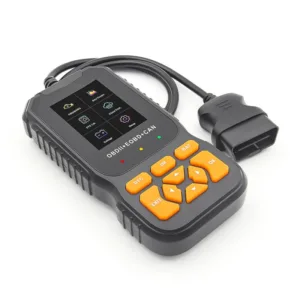
This code indicates that the vehicle’s Powertrain Control Module (PCM) has detected an electrical problem—specifically an open circuit or a malfunction—in one of the circuits responsible for controlling the boost pressure generated by the turbocharger or supercharger. The “B” designation typically refers to a secondary or specific control circuit within the boost control system. When the PCM cannot properly command or monitor this circuit, it sets code P004A and illuminates the Check Engine Light (CEL). The first step in addressing this issue is to use a professional-grade obd2 scanner to confirm the code and check for any related faults.
Symptoms of Error Code P004A
Drivers may notice one or more of the following symptoms when P004A is active:
- Illuminated Check Engine Light (MIL): This is the most common and immediate symptom.
- Reduced Engine Performance (Limp Mode): A significant loss of power and acceleration, as the PCM may limit boost to protect the engine.
- Poor Fuel Economy: Inefficient combustion due to incorrect boost levels can lead to increased fuel consumption.
- Lack of Boost or Overboost: The vehicle may feel sluggish (underboost) or experience sudden, uncontrolled power surges (overboost), which can cause engine knocking or detonation.
- Rough Idle or Stalling: In some cases, the engine may idle roughly or even stall.
Main Causes of Error Code P004A
- Faulty Boost Pressure Sensor or Turbocharger Position Sensor: A sensor providing incorrect data to the PCM.
- Failed Turbocharger or Supercharger: Mechanical failure of the forced induction unit itself.
- Defective Boost Control Solenoid/Actuator: The electronic valve that regulates boost pressure is stuck, open, or shorted.
- Wiring or Connector Issues: An open circuit, short to ground, short to power, or high resistance in the wiring harness for the “B” circuit.
- Faulty Powertrain Control Module (PCM): Although rare, the engine computer itself could be malfunctioning.
- Vacuum Leaks: If the boost control system uses vacuum actuators, leaks in the vacuum lines can cause control issues.
How to Diagnose Error Code P004A?
- Confirm the Code: Use an advanced car code scanner to read the P004A code and any other related codes. Clear the codes and perform a test drive to see if P004A returns immediately (hard fault) or intermittently.
- Visual Inspection: With the engine off, inspect all wiring, connectors, and vacuum lines associated with the turbocharger/supercharger, boost control solenoid, and related sensors. Look for obvious damage, corrosion, or disconnections.
- Check for Technical Service Bulletins (TSBs): Use your diagnostic resources to see if the manufacturer has issued any known fixes or updates for this issue on your specific vehicle model.
- Active Component Testing: Using a bidirectional scan tool, command the boost control solenoid on and off while monitoring engine RPM and boost pressure sensor data. The RPM should fluctuate, and the sensor reading should change accordingly.
- Electrical Circuit Testing:
- Disconnect the connector at the suspected component (solenoid, sensor).
- With a digital multimeter, check for power (typically 12V with ignition on) and a good ground at the harness connector.
- Check for continuity in the signal wire back to the PCM.
- Check for shorts to ground or voltage on all circuit wires.
- Component Testing: Test the resistance of the boost control solenoid or sensor according to the manufacturer’s specifications. Compare the readings to known good values.
- Mechanical Inspection: For suspected turbocharger issues, inspect the turbo for shaft play, damaged fins, or excessive oil leakage. Check the wastegate actuator for proper movement.
Possible Causes and Diagnostic Methods
| Possible Cause | How to Check? |
| Faulty Boost Control Solenoid | Test solenoid resistance with a multimeter. Use a scan tool to command it on/off and listen for an audible click. Check for power and ground at its connector. |
| Open Circuit in Wiring | Perform a continuity test on the wires in the “B” control circuit between the PCM and the component (solenoid/sensor). |
| Short Circuit | Check for continuity between the circuit wires and chassis ground, and between the wires and a 12V source. |
| Faulty Boost Pressure Sensor | Monitor the sensor’s live data with a car code scanner while creating boost (e.g., revving the engine in neutral). The reading should increase smoothly. Compare to a known-good spec or a manifold absolute pressure (MAP) sensor reading. |
| Vacuum Leak | Inspect all vacuum lines connected to the boost control actuator and wastegate. Use a smoke machine or carburetor cleaner (with caution) to find leaks. |
| Failed Turbocharger/Supercharger | Inspect for physical damage, excessive shaft play, or seized components. Check for proper wastegate movement. |
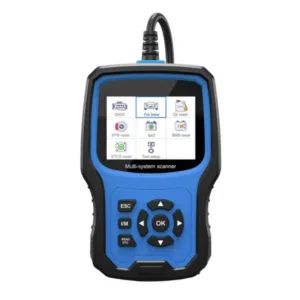
Tools needed: A professional obd2 code scanner with bidirectional controls, a digital multimeter, a hand vacuum pump (for vacuum-actuated systems), basic hand tools, and vehicle-specific wiring diagrams.
How do I fix error code P004A? (Solutions to the Problem)
Simple Fixes
- Repair Wiring/Connectors: If inspection reveals a broken wire, corroded terminal, or loose connection, repair it using proper solder and heat-shrink tubing. Clean corroded connectors with electrical contact cleaner.
- Fix Vacuum Leaks: Replace any cracked, brittle, or disconnected vacuum lines. Ensure all connections are tight.
In-depth Diagnosis and Repair Solutions
- Replace the Boost Control Solenoid: If testing confirms the solenoid is faulty, replace it with an OEM or high-quality equivalent part.
- Replace the Boost Pressure Sensor: If sensor data is erratic or out of specification, replacement is necessary.
- Repair or Replace the Turbocharger/Supercharger: For internal mechanical failures (seized vanes on a VGT, broken wastegate arm, bearing failure), the unit may need to be rebuilt or replaced. This is a complex and costly repair.
- Address PCM Issues: If all wiring and components test good, and no communication issues are present, the PCM itself may be faulty. This requires professional diagnosis and potentially reprogramming or replacement.
- After any repair, clear the codes with your obd code reader, perform a test drive, and verify the code does not return.
Common Error Code P004A in Vehicles
Ford (EcoBoost engines – Focus ST, Fiesta ST, Mustang EcoBoost, F-150 EcoBoost): Very common. Often related to the electronic wastegate actuator or its wiring. The turbocharger itself can also fail. Using a capable car code scanner to monitor desired vs. actual boost pressure is key for diagnosis.
General Motors (Chevrolet, GMC, Cadillac with 2.0L, 2.7L, 3.6L turbo engines): Found in models like the Chevrolet Malibu, Equinox, Silverado, and Cadillac CT4/CT5. Issues often stem from the turbocharger bypass valve solenoid or a faulty boost pressure sensor. Wiring harness chafing near the turbo is also a known issue.
Volkswagen/Audi Group (2.0T TSI/TFSI, 3.0T engines): Prevalent in Golf GTI, Jetta GLI, Audi A4, S4, Q5. Common culprits include the diverter valve (DV), wastegate actuator, or the turbocharger itself on higher-mileage vehicles. Diagnosis often requires VCDS or OBDeleven for specific measuring values.
BMW (N54, N55, B58 turbo engines): Common in 3 Series, 5 Series, X3, X5. Can be caused by a failing electronic wastegate actuator, turbocharger vanes sticking (on older N54 engines), or a faulty boost pressure sensor. Professional diagnosis with ISTA software is highly recommended.
Mercedes-Benz (M276, M278 turbo engines): Seen in C-Class, E-Class, S-Class, and SUVs. Often related to the turbocharger actuator motor or its control module. The charge air system should also be checked for leaks.
Subaru (WRX, STI, Ascent, Legacy XT): Common in turbocharged Subarus. The boost control solenoid is a frequent failure point. Also check for cracked intercooler pipes or vacuum line leaks in the boost control system.
Hyundai/Kia (1.6T, 2.0T, 2.5T Theta and Smartstream engines): Found in Sonata, Tucson, Stinger, Genesis models. Issues can range from a faulty wastegate actuator solenoid to a failing turbocharger. A thorough scan with a professional-grade obd2 diagnostic tool is essential.
Honda (1.5T, 2.0T engines in Civic, Accord, CR-V): The wastegate valve and its actuator are common failure points, leading to underboost or overboost conditions. The electronic wastegate actuator may need calibration with the Honda HDS system after replacement.
Nissan/Infiniti (VR30DDTT, MR16DDT engines in Q50/Q60, Juke): Can be triggered by a faulty boost pressure sensor, a sticking wastegate, or issues with the turbocharger’s variable nozzle control.
Chrysler/Dodge/Jeep (2.0L Turbo, 3.0L EcoDiesel, Hellcat supercharged engines): In turbo models, check the boost control solenoid and associated vacuum lines. On supercharged models (Hellcat), the code may relate to the supercharger bypass actuator circuit.
Land Rover/Jaguar (Ingenium engines): Prone to turbocharger-related issues. P004A can indicate problems with the turbo actuator or the turbocharger unit itself, which are known weak points.
Mazda (2.5T Skyactiv-G engine in CX-5, CX-9, Mazda6): Check the boost pressure sensor and the wastegate actuator. Wiring issues in the engine bay are also possible.
P004A Frequently Asked Questions
What is the first thing I should do when I see code P004A?
The first step is to use a reliable car code reader to confirm the code is present and check for any other related codes (like P004B, P004C, or P004D). Do not ignore it, as driving with a faulty boost control system can lead to severe engine damage from overboost.
Is it safe to drive my car with the P004A code?
It is not recommended. The PCM will often put the engine into a reduced-power “limp mode” to prevent damage. However, if the fault causes an overboost condition, it can lead to engine knocking and catastrophic internal damage. Have the vehicle diagnosed as soon as possible.
My code is P004A. What do the related codes P004B, P004C, and P004D mean?
These are all part of the same family of boost control circuit codes for the “B” circuit. P004B indicates a “Range/Performance” problem (the signal is out of expected range). P004C indicates a “Circuit Low” condition (signal voltage too low). P004D indicates a “Circuit High” condition (signal voltage too high). P004A specifically means “Circuit/Open”.
Will disconnecting the battery clear the P004A code?
Disconnecting the battery may clear the code temporarily, but it will almost certainly return once the PCM runs its self-tests again if the underlying fault is still present. A proper fix requires diagnosing and repairing the root cause.
How much does it typically cost to repair a P004A error?
Costs vary widely: Diagnostic fee: $100-$200. A new boost control solenoid: $50-$300. A new boost pressure sensor: $80-$250. Labor for these parts: 1-2 hours ($100-$300). If the turbocharger itself needs replacement: $1,500-$4,000+ including parts and labor. Total can range from $200 for a simple solenoid swap to over $4,000 for a turbo replacement.
Can I replace the boost control solenoid myself to fix P004A?
If you have intermediate mechanical skills, replacing a boost control solenoid is often straightforward. It’s usually mounted on or near the turbocharger or intake manifold. Always disconnect the battery, locate the part, disconnect the electrical connector and vacuum lines (if applicable), unbolt it, and install the new one. However, proper diagnosis first is crucial to ensure the solenoid is actually the problem.
Why did P004A appear after I installed a performance tune or aftermarket parts?
Aggressive tunes can increase boost pressure beyond the factory components’ design limits, causing premature failure of solenoids or sensors. Aftermarket intakes or exhausts that aren’t properly calibrated can also cause the PCM to see unexpected airflow values, triggering boost control faults.
What’s the difference between a turbocharger and a supercharger in the context of this code?
Both are forced induction systems, but a turbo is driven by exhaust gases, while a supercharger is driven by the engine’s crankshaft. The code P004A applies to the electronic boost control circuit for either system. The diagnostic approach is similar, focusing on the control solenoid, sensors, and wiring.
My car has a variable geometry turbo (VGT). Does that change the diagnosis for P004A?
Yes. On a VGT, the “B” circuit often controls the actuator that moves the vanes inside the turbo. A P004A on a VGT vehicle frequently points to a stuck or faulty vane actuator, a problem with the actuator’s position sensor, or the wiring to it. Diagnosis may require monitoring specific “turbo vane position” PIDs with a professional obd2 scanner.
Could a dirty or clogged air filter cause code P004A?
Not directly. A severely restricted air filter can cause low boost and other performance issues, but it wouldn’t typically trigger a “Circuit/Open” code for a specific control circuit. P004A is an electrical fault code.
After fixing the issue, do I need a special tool to reset the check engine light?
You will need an OBD2 scanner or car code scanner to clear the code. After the repair, simply connect the scanner, navigate to the “Clear Codes” function, and confirm. The light should turn off and stay off after a successful repair and a few drive cycles.
My code is intermittent—the light comes on and off. What does that mean?
An intermittent P004A almost always indicates a wiring problem—a loose connector, a wire that is frayed and occasionally shorting, or a failing component that works sometimes. The diagnostic steps are the same, but you may need to wiggle wires and connectors while the engine is running to reproduce the fault.
How critical is it to use OEM (Original Equipment Manufacturer) parts for repair?
For sensors and electronic control components like the boost control solenoid, using OEM or high-quality OEM-equivalent parts is highly recommended. These components communicate directly with the PCM, and aftermarket parts of poor quality may not meet the precise electrical specifications, leading to the code returning or other driveability issues.
P004A Related OBD2 Errors
- P004B: Turbocharger/Supercharger Boost Control “B” Circuit Range/Performance
- P004C: Turbocharger/Supercharger Boost Control “B” Circuit Low
- P004D: Turbocharger/Supercharger Boost Control “B” Circuit High
- P0234: Turbocharger/Supercharger “A” Overboost Condition
- P0299: Turbocharger/Supercharger Underboost Condition
- P2263: Turbocharger/Supercharger Boost System Performance
Important Note: Diagnosing and repairing boost control system faults requires a good understanding of automotive electrical systems and forced induction. If you are not comfortable with this work, consulting a qualified professional mechanic is strongly advised. Driving with an unresolved overboost condition can lead to severe and expensive engine damage.